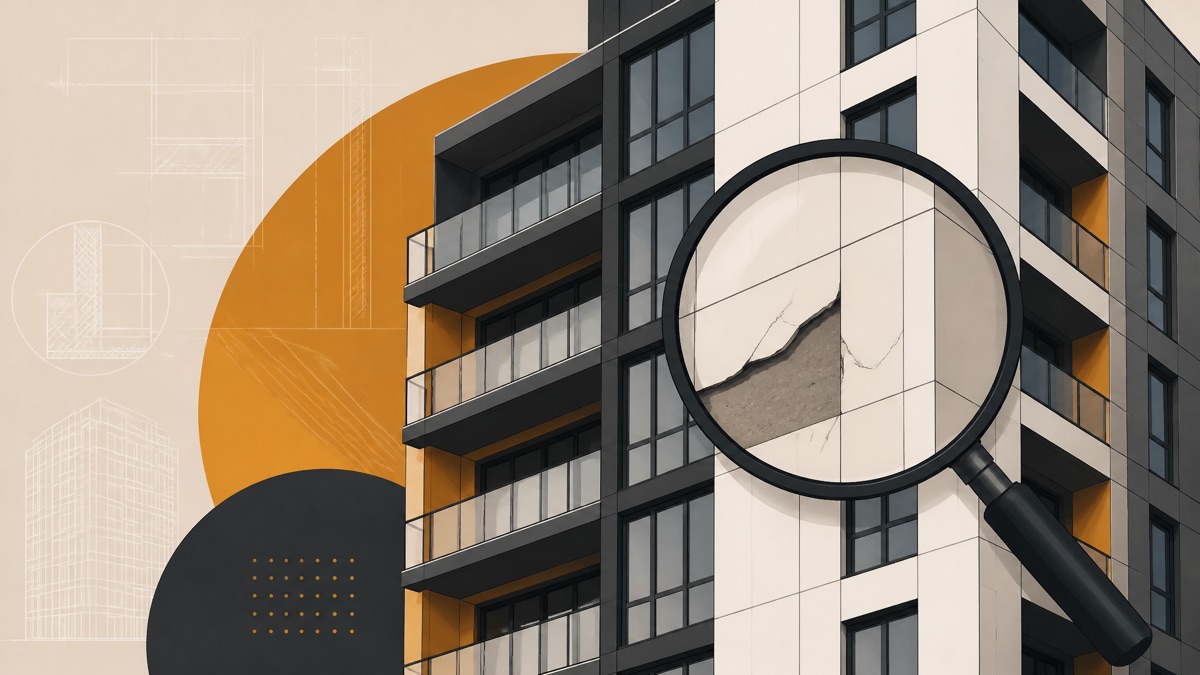
The Buyers Agent's Guide to Building Defects and Cladding Risk: Protecting Clients in Apartment Purchases
What buyers agents need to know about combustible cladding, structural defects, owners corporation red flags, and protecting apartment buyers after the Opal Tower and Mascot Towers crises.
The Buyers Agent's Guide to Building Defects and Cladding Risk: Protecting Clients in Apartment Purchases
Since the Opal Tower evacuation in late 2018 and the Mascot Towers cracking crisis that followed in 2019, Australian apartment buyers have become far more alert to building defects than they were a decade ago. For buyers agents, this shift has made defect risk assessment an essential part of the apartment purchasing process - not an optional extra. A client who ends up owning a lot in a building with combustible cladding, waterproofing failures, or structural defects can face special levies running into tens of thousands of dollars, reduced resale value, and in worst cases, an uninhabitable property during remediation works.
This guide sets out what buyers agents need to understand about building defects and cladding risk, how to investigate it before a client commits, and how to have an informed conversation with clients about a risk category that did not exist in the public consciousness a generation ago.
Why Building Defects Became a National Issue
The combustible cladding crisis centred on aluminium composite panel (ACP) cladding with a polyethylene core, the same product implicated in the Grenfell Tower fire in London and the Lacrosse building fire in Melbourne's Docklands in 2014. Many buildings constructed from the early 2000s through the mid-2010s used this cladding because it was cheaper than compliant alternatives, and in some cases non-compliant products were substituted during construction without proper certification oversight.
Separately, a wave of structural defect cases - cracking, waterproofing failures, and inadequate fire safety compliance - exposed weaknesses in the private certification system used across most Australian states, where builders or developers could engage their own certifiers. Several state governments responded with reforms, including:
- New South Wales: The Design and Building Practitioners Act 2020 and the Residential Apartment Buildings (Compliance and Enforcement Powers) Act 2020, along with the NSW Cladding Safety Panel and government-funded remediation loan schemes for affected owners corporations.
- Victoria: The Cladding Safety Victoria program, established to fund and manage rectification of combustible cladding on residential buildings, along with reforms to building surveyor independence.
- Queensland: A mandatory cladding register and notification obligations for building owners, administered through the Queensland Building and Construction Commission.
The practical upshot for buyers agents is that defect risk is not evenly distributed. It concentrates heavily in multi-storey residential buildings constructed roughly between 2000 and 2018, particularly in inner-city and middle-ring apartment developments in Sydney, Melbourne, and Brisbane, though it is not exclusive to these cities or this window.
Red Flags Buyers Agents Should Investigate
Building Age and Construction Era
Buildings completed between roughly 2000 and 2018 warrant closer scrutiny, particularly those built during the peak of the apartment construction boom in the early-to-mid 2010s when building approval volumes outpaced certification capacity in several states. This is a starting filter, not a conclusive test - plenty of buildings from this era are sound, and some older or newer buildings have defects too.
Cladding Material
Ask directly whether the building has external cladding, and if so, what type. ACP cladding with a polyethylene core is the highest-risk product. Expanded polystyrene (EPS) in external insulation and finish systems has also been flagged in some audits. A vendor or agent should be able to answer this, or it should be confirmed through the owners corporation records or a building report. If nobody can answer the question clearly, treat that as a signal to dig further, not to assume the answer is favourable.
State Cladding Registers
Several states maintain registers or notification systems for buildings identified as having combustible cladding. Checking whether a building appears on a relevant state register, where one exists and is accessible, is a useful due diligence step, though absence from a register does not guarantee a building is defect-free, particularly for buildings not yet assessed.
Owners Corporation Records and Special Levies
This is often the single most revealing document set in the entire purchase. Request the owners corporation or body corporate records, including:
- Minutes from recent annual general meetings and any special general meetings
- Any building defect reports, engineering assessments, or fire safety audits
- Details of any special levies raised, proposed, or under discussion
- The capital works fund or sinking fund balance relative to any known remediation costs
- Any litigation, including building defect claims against the builder or developer, and the status of the statutory warranty period
A pattern of multiple adjourned meetings discussing "building issues" without resolution, or a sinking fund balance that looks thin relative to the building's age and size, should prompt further investigation before a client proceeds.
Independent Building Inspection and Strata Report
A standard pre-purchase building and pest inspection typically covers the interior of the specific lot and common property accessible to the inspector, but may not extend to a full facade or structural assessment. For apartment purchases, particularly in buildings identified as higher risk, recommend clients commission a dedicated strata report from a specialist provider, and where red flags emerge, an independent engineering assessment of the facade and structure.
How to Have This Conversation with Clients
Many clients, particularly first home buyers and interstate or international purchasers, simply do not know this is a risk category to consider. Part of a buyers agent's value is raising it proactively rather than waiting for a client to ask, framed in practical terms rather than alarmist ones:
- Explain that the risk is building-specific, not apartment-market-wide, and that thorough due diligence can identify most red flags before exchange.
- Set realistic expectations about timeframes - ordering a strata report and reviewing owners corporation minutes adds time to the due diligence period, which may affect cooling-off or finance condition timeframes in contract negotiations.
- Be transparent that identifying a defect or cladding issue does not automatically mean walking away - some buildings are mid-remediation with funding secured and a clear completion timeline, and the price may already reflect the risk. The decision is the client's to make once they have full information.
- Where a client proceeds despite known issues, document that the risk was disclosed and discussed, for your own professional protection as much as the client's benefit.
Practical Checklist for Apartment Purchases
- Confirm the building's construction completion date and builder/developer name.
- Ask whether external cladding is present and what type, through the agent, owners corporation, or strata manager.
- Check any applicable state cladding register or notification system.
- Request and review at least two to three years of owners corporation or body corporate meeting minutes.
- Review the capital works fund or sinking fund balance and any forecast special levies.
- Check for any current or past defect litigation against the builder or developer, and confirm whether the statutory warranty period has expired.
- Commission a specialist strata report, and an independent engineering assessment if red flags are identified.
- Discuss findings transparently with the client before advising on an offer or exchange decision.
Frequently Asked Questions
Does every apartment built between 2000 and 2018 have cladding problems?
No. The vast majority of apartment buildings from this era do not have significant defects, and many that did have cladding identified have already completed remediation. The construction era is simply a prompt for closer due diligence, not a reason to avoid apartments outright.
Who pays for cladding remediation if it is needed?
This varies significantly by state, building history, and individual circumstances, and can involve the owners corporation via special levies, builder or developer liability claims, government remediation funding schemes in some states, or a combination of these. Buyers agents should not advise clients on likely cost allocation - this requires specific legal and strata management advice - but should ensure clients understand that cost responsibility is a real question to have answered before purchasing.
Can a buyers agent be held liable for not identifying a defect?
A buyers agent is generally not expected to be a building expert, but is expected to exercise reasonable diligence, including recommending appropriate specialist reports and flagging known risk indicators such as construction era and cladding type. Clear documentation of advice given and reports recommended is an important professional safeguard.
Should clients avoid all buildings with identified cladding issues?
Not necessarily. Some buildings have secured funding and a clear remediation timeline, and the purchase price may already reflect the remaining risk and disruption. This is a case-by-case decision that depends on the client's risk tolerance, timeframe, and the specifics of the remediation plan, made with full information rather than avoided by default.
Are houses and townhouses exposed to the same risk?
Combustible cladding risk is overwhelmingly concentrated in multi-storey residential buildings, so standalone houses and most townhouses are not materially exposed in the same way. However, general building defect risk, such as waterproofing or structural issues, exists across all property types and warrants standard due diligence regardless of building height.
Building defect and cladding risk is now a permanent feature of the Australian apartment market, and clients increasingly expect their buyers agent to understand it. Agents who build genuine competence in this area - knowing which questions to ask, which documents to request, and when to bring in a specialist - protect their clients from costly surprises and build a reputation for the kind of thorough due diligence that wins referrals.