The Buyers Agent's Guide to Townhouse and Villa Purchases: Strata vs Community Title Explained
Complete guide to townhouse and villa purchases for buyers agents. Understand strata vs community title, red flags in body corporate records, levies, by-laws, and essential due diligence for Australian townhouse markets.
The Buyers Agent's Guide to Townhouse and Villa Purchases: Strata vs Community Title Explained
Townhouses and villas represent one of Australia's fastest-growing property segments, appealing to downsizers, first-home buyers, and investors alike. However, these properties come with title structures - strata and community title - that create unique ownership rights, responsibilities, and potential issues that buyers agents must navigate expertly.
Understanding the critical differences between strata and community title, identifying red flags in body corporate records, and advising clients on the long-term implications of townhouse ownership separates competent buyers agents from exceptional ones. This comprehensive guide covers everything you need to know about townhouse and villa purchases in Australia.
Understanding Townhouse and Villa Property Types
Before diving into title structures, it is essential to understand the physical property types and how they differ across Australian markets.
Defining Townhouses
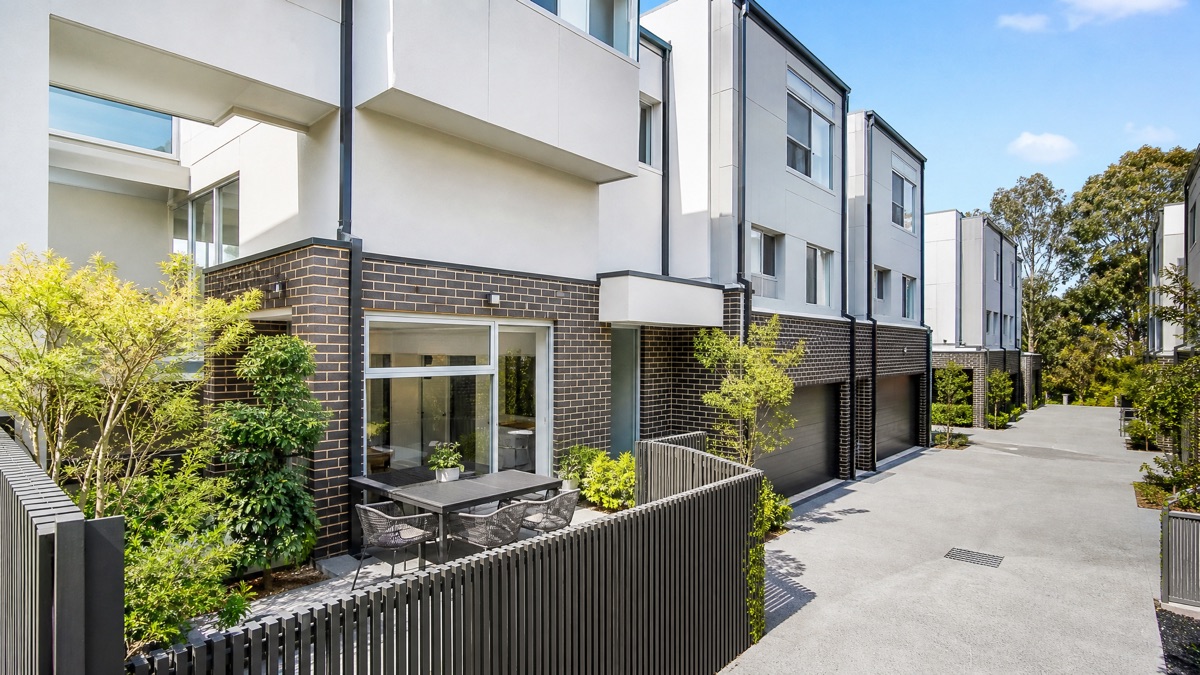
Townhouses are typically multi-level attached dwellings that share one or more common walls with neighbouring properties. Characteristics include:
- Two or three storeys with internal stairs
- Individual street frontage or access via private driveway
- Private courtyards or small gardens (usually exclusive use)
- Attached garages or carports
- Shared common areas (driveways, visitor parking, landscaping)
Defining Villas
Villas are generally single-level detached or semi-detached dwellings within a managed complex. Common features include:
- Single storey construction
- Smaller footprint than traditional houses
- Private outdoor space (courtyard or garden)
- Shared driveways and common property
- Popular with retirees and downsizers
The distinction between townhouses and villas varies by state and local usage, but the key commonality is shared ownership of common property under either strata or community title.
Strata Title vs Community Title: The Critical Difference
The most important decision buyers agents must help clients understand is the difference between strata title and community title - two fundamentally different ownership structures that govern most townhouses and villas.
Strata Title Explained
Strata title is the most common ownership structure for townhouses, villas, and apartments in Australia. Under strata title:
- Individual ownership: Each owner holds title to their individual 'lot' (the townhouse itself)
- Shared ownership: All owners collectively own the common property as 'tenants in common'
- Body corporate: A legal entity (Owners Corporation in Victoria, Body Corporate in QLD, Owners Corporation in NSW) manages shared property
- Levies: Regular contributions to maintain common property and build sinking funds
- By-laws: Rules governing behaviour, renovations, pets, noise, and other matters
Strata Title: State Variations
Each Australian state has its own strata title legislation:
- New South Wales: Governed by Strata Schemes Management Act 2015
- Victoria: Owners Corporation Act 2006
- Queensland: Body Corporate and Community Management Act 1997
- South Australia: Community Titles Act 1996 and Strata Titles Act 1988
- Western Australia: Strata Titles Act 1985
Community Title Explained
Community title is a more flexible ownership structure, common in master-planned estates and larger residential developments:
- Freehold land: Each owner holds freehold title to their lot (including the land beneath)
- Common property: Shared facilities like roads, parks, pools managed by a community association
- Greater autonomy: Owners typically have more freedom to modify their property
- Tiered structures: Large developments may have multiple community associations (neighbourhood and precinct level)
- Development covenants: Restrictions on building, landscaping, and external appearance
Key Differences: Strata vs Community Title
| Aspect | Strata Title | Community Title |
|---|---|---|
| Land ownership | No individual land ownership | Freehold ownership of land beneath dwelling |
| Common property | All owners own common property | Managed by community association |
| Autonomy | Restricted by strata by-laws | More flexibility within covenants |
| Levies | Quarterly strata levies | Community association fees |
| Disputes | State tribunals (NCAT, VCAT, QCAT) | Community association and tribunals |
| Insurance | Building insurance by strata | Often individual responsibility |
Due Diligence Essentials: What Buyers Agents Must Review
Townhouse and villa purchases require enhanced due diligence beyond standard house purchases. Buyers agents must obtain and carefully review multiple documents before advising clients to proceed.
Essential Documents Checklist
- Strata/community plan: Shows lot boundaries, common property, exclusive use areas
- By-laws: Rules governing property use, renovations, pets, rentals, parking
- Financial statements: Last 2-3 years to identify spending patterns and levy trends
- Sinking fund report: Balance and planned major works
- Annual general meeting minutes: Last 2-3 years to identify disputes, issues, personalities
- Building insurance policy: Coverage limits, exclusions, claims history
- 10-year maintenance plan: Scheduled major works and estimated costs
- Special levies: Any current or planned special levies for major works
- Building defect reports: For new or recently built complexes
- Legal disputes: Current or recent tribunal cases, legal actions
Red Flags in Strata and Community Title
Experienced buyers agents know to watch for warning signs that indicate problematic ownership structures:
Financial Red Flags
- Insufficient sinking fund balance (should be 6-12 months of levies minimum)
- Increasing levies year-on-year without corresponding improvements
- Special levies being raised regularly (indicates poor planning)
- Owners in arrears (check arrears list in financial statements)
- Insurance premium increases above inflation (may indicate claims or building issues)
- No 10-year maintenance plan or capital works fund plan
Governance Red Flags
- Difficulty obtaining AGM minutes or financial records (lack of transparency)
- High owner turnover (may indicate dissatisfaction)
- Ongoing disputes between owners mentioned in minutes
- Legal action against or by the body corporate
- Inability to obtain quorum for meetings (owner apathy)
- Professional strata manager recently changed (may indicate problems)
Physical Red Flags
- Deferred maintenance visible during inspection (gutters, driveways, common areas)
- Water damage or staining on common property
- Inconsistent building materials indicating piecemeal repairs
- Overgrown landscaping or neglected common areas
- Security systems not functioning
- Poorly maintained pool or recreational facilities
Analysing Strata Levies and Financial Health
One of the most important services buyers agents provide is analysing the financial health of the strata or community scheme and forecasting future costs for clients.
Understanding Levy Structure
Strata levies typically consist of two components:
- Administrative fund: Covers day-to-day operating expenses (insurance, management fees, utilities, gardening)
- Sinking fund (capital works fund): Savings for major repairs and replacements (roof, painting, driveways)
Quarterly levies are calculated based on unit entitlement - each owner's proportional share of the scheme. Larger townhouses typically have higher unit entitlements and therefore higher levies than smaller villas in the same complex.
Benchmarking Levy Costs
What constitutes 'reasonable' levies varies by property type, age, and amenities:
- Basic townhouse complex (no pool/gym): $800-$1,500 per quarter
- Townhouse with pool and gardens: $1,500-$2,500 per quarter
- Luxury townhouse with full amenities: $2,500-$4,000+ per quarter
- Villa units (minimal common property): $400-$1,200 per quarter
Buyers agents should always compare levies against comparable properties in the same suburb and assess whether levy costs are justified by amenities and maintenance standards.
Sinking Fund Analysis
The sinking fund balance is one of the most important indicators of scheme financial health. As a rule of thumb:
- Minimum recommended balance: 6 months of total levies
- Ideal balance: 12+ months of levies, or sufficient to cover the next major works item
- Warning sign: Balance declining year-on-year without major works being completed
Review the 10-year maintenance plan to identify upcoming major expenditures like roof replacement ($150,000-$400,000 for townhouse complexes), driveway resurfacing ($50,000-$150,000), or building repainting ($80,000-$200,000).
By-Laws and Restrictions: What Clients Need to Know
Strata and community title by-laws can significantly impact a client's enjoyment of their property. Buyers agents must review by-laws carefully and explain restrictions before purchase.
Common By-Law Restrictions
- Pets: Many schemes prohibit pets or limit type/size/number
- Renovations: Require body corporate approval for changes affecting common property or building exterior
- Noise: Restrictions on operating hours for noise (power tools, music)
- Parking: Limits on number of vehicles, visitor parking rules, no commercial vehicles
- Leasing: Some schemes restrict short-term rentals (Airbnb) or require owner occupancy
- Clotheslines and outdoor items: Restrictions on what can be visible from street
- Satellite dishes and antennas: Often prohibited or restricted
- Business use: Many schemes prohibit operating businesses from the property
Exclusive Use Areas
Many townhouses include 'exclusive use' areas - portions of common property allocated to a specific lot for private use (courtyards, gardens, parking spaces).
Key considerations for buyers agents:
- Exclusive use is NOT ownership - it is a licence that can be revoked in some circumstances
- The lot owner is typically responsible for maintaining exclusive use areas
- Alterations to exclusive use areas usually require body corporate approval
- Exclusive use by-laws should be clearly documented in the strata plan
- Check if exclusive use areas have ongoing levies attached
Insurance Considerations
Insurance for townhouses and villas is more complex than standalone houses, with responsibilities split between the body corporate and individual owners.
Strata Title Insurance
Under strata title, the body corporate must maintain building insurance covering:
- The building structure and common property
- Fixtures that were part of the original construction
- Common property contents (if any)
- Public liability for common areas
Individual owners are responsible for:
- Contents insurance for personal belongings
- Landlord insurance (if leasing the property)
- Renovations and improvements insurance (covering changes they have made)
- Gap insurance (to cover the difference if body corporate insurance limits are insufficient)
Community Title Insurance
Under community title, insurance responsibilities can vary depending on the community plan. Some community schemes require individual owners to maintain full building insurance, while others provide building insurance through the community association.
Buyers agents must clarify insurance responsibilities before purchase and ensure clients understand their obligations.
Insurance Red Flags
- Building sum insured appears insufficient for rebuild costs
- High excess amounts ($10,000+ suggests a history of claims)
- Exclusions for specific perils (flood, earthquake) in high-risk areas
- Recent claims history indicating building defects or recurring issues
- Difficulty obtaining insurance quotes (indicates insurer concerns)
New vs Established Townhouse Complexes
The age of a townhouse or villa complex dramatically affects risk profile, and buyers agents must adjust their due diligence accordingly.
New Townhouses (0-10 Years Old)
Advantages:
- Modern design, energy efficiency, contemporary finishes
- Lower immediate maintenance costs
- Builder's warranty and defect liability period
- Often better technology integration (NBN, smart home)
Risks:
- Building defects may not yet be apparent
- Initial sinking fund may be insufficient for future needs
- Potential for builder disputes and rectification issues
- Unknown body corporate dynamics (new owners still establishing culture)
- Some developments still under construction with ongoing builder activity
Defect Liability Period
In Australia, new buildings typically come with statutory warranty periods:
- 6-7 years for major structural defects (varies by state)
- 2 years for non-structural defects
- 6-12 months for minor defects
For new townhouses, buyers agents should request building defect reports prepared for the body corporate and review minutes for any ongoing defect disputes.
Established Townhouses (10+ Years Old)
Advantages:
- Established gardens and mature landscaping
- Known building performance and maintenance history
- Established body corporate with clear governance culture
- Major defects should have been identified and rectified
- Often better locations (established suburbs)
Risks:
- Approaching end of life for major building components (roofs, driveways, plumbing)
- Dated design and finishes may require renovation
- Higher ongoing maintenance costs
- Potential for special levies for major works
- Older building codes and energy efficiency standards
Townhouse Investment Considerations
Many buyers agents work with investor clients purchasing townhouses for rental yield. These properties have unique investment characteristics compared to apartments and houses.
Rental Yield Analysis
Townhouses typically achieve rental yields between apartments (higher yield) and houses (lower yield):
- Capital city suburbs: 3.5%-4.5% gross yield
- Regional markets: 4.5%-6.5% gross yield
- Premium townhouses: 3.0%-4.0% gross yield
When calculating net yield, factor in strata levies (significant ongoing cost) and ensure positive cash flow after all expenses.
Tenant Appeal Factors
Townhouses appeal to specific tenant demographics:
- Young families wanting space without house maintenance
- Professionals seeking low-maintenance lifestyle properties
- Downsizers in transition before purchasing
- Pet owners (if by-laws permit)
Features that maximise rental appeal:
- Second bathroom (ensuite or additional toilet)
- Double garage or secure parking
- Private outdoor space (courtyard or balcony)
- Air conditioning
- Proximity to schools and transport
- Low strata levy costs
Capital Growth Considerations
Townhouse capital growth tends to underperform detached houses but outperform apartments in most markets. Factors affecting townhouse capital growth:
- Land component: Townhouses with higher land value ratios perform better
- Location: Inner and middle-ring suburbs outperform outer suburbs
- Scarcity: Smaller complexes (4-12 townhouses) often outperform large developments
- Quality: Well-maintained complexes with low owner turnover achieve better growth
- Buyer appeal: 3-bedroom townhouses with garages have broadest buyer appeal
Advising Downsizers and Retirees
Downsizers represent a significant portion of townhouse and villa buyers. Buyers agents must understand the specific needs and concerns of this demographic.
Downsizer Priorities
- Single-level living (villas preferred over multi-storey townhouses)
- Low maintenance gardens and exteriors
- Security features (gated access, CCTV)
- Proximity to medical facilities and shopping
- Active, well-maintained body corporate
- Quiet, established complexes with similar-aged residents
- Accessibility features (step-free entry, wide doorways)
Age-Friendly Design Features
When advising downsizers, highlight properties with:
- Level or ramped entry (no steps)
- Master bedroom and bathroom on ground floor
- Wide hallways and doorways (wheelchair accessible)
- Walk-in shower (no hob)
- Lever door handles and taps
- Good natural light
- Secure, easy-access garage
Retirement Village vs Strata Townhouse
Help downsizer clients understand the key differences:
| Factor | Strata Townhouse/Villa | Retirement Village |
|---|---|---|
| Ownership | Freehold or strata title | Lease or licence (not ownership) |
| Capital growth | Full capital growth to owner | Deferred management fees reduce proceeds on exit |
| Age restriction | No age restriction | Typically 55+ or 60+ |
| Services | Minimal services | Extensive services and care options |
| Exit flexibility | Sell whenever you choose | May have restrictions on timing of sale |
Dispute Resolution and Problem Solving
Even the best due diligence cannot always prevent issues emerging after purchase. Buyers agents should educate clients about dispute resolution mechanisms.
Common Townhouse Disputes
- Noise complaints between neighbours
- Parking disputes (visitors, allocation, commercial vehicles)
- Pet issues (unauthorised pets, noise, mess)
- Renovation disputes (unapproved work, damage to common property)
- Levy arrears and debt collection
- Maintenance responsibility disagreements
- Body corporate governance issues
Dispute Resolution Pathways
Australian states have tribunal systems for strata disputes:
- NSW: NSW Civil and Administrative Tribunal (NCAT)
- Victoria: Victorian Civil and Administrative Tribunal (VCAT)
- Queensland: Queensland Civil and Administrative Tribunal (QCAT)
- SA: South Australian Civil and Administrative Tribunal (SACAT)
- WA: State Administrative Tribunal (SAT)
Most disputes should be attempted to be resolved through internal body corporate processes (committee meetings, AGMs, mediation) before proceeding to tribunal.
Case Study: Identifying a Problem Townhouse Complex
Emma, a Sydney-based buyers agent, was engaged by first-home buyers looking for a townhouse in Parramatta under $800,000. She identified a 2015-built townhouse listed at $750,000 in a complex of 26 townhouses.
Initial Appeal
The property appeared ideal: modern, well-located near train station, pool and gym facilities, and priced $50,000 below recent comparable sales.
Due Diligence Discoveries
Emma's detailed review of strata documents revealed:
- Sinking fund balance of $78,000 for a 26-lot complex (critically low)
- AGM minutes showing ongoing building defect disputes with the builder
- Recent special levy of $8,000 per lot for waterproofing repairs
- Another planned special levy of $12,000 per lot for facade rectification
- Three owners in arrears totaling $47,000
- Body corporate legal costs exceeding $120,000 over two years
- Insurance premium increased 180% in the last year due to water damage claims
Emma's Advice
Emma advised her clients against purchasing, explaining:
- Immediate exposure to $20,000 in special levies ($8,000 overdue + $12,000 planned)
- High probability of further special levies given defect history and low sinking fund
- Legal disputes can take 3-5 years to resolve, with uncertain outcomes
- High owner arrears indicate other owners are also struggling financially
- Rising insurance costs would drive levy increases for years
The clients heeded Emma's advice and continued their search. Twelve months later, the same townhouse re-listed at $720,000 after the special levy program deterred multiple buyers.
FAQ: Townhouse and Villa Purchases
What is the difference between a townhouse and a villa?
Townhouses are typically multi-level attached dwellings (usually 2-3 storeys) with shared walls, while villas are generally single-level detached or semi-detached properties. Both usually exist within strata or community title schemes with shared common property. Villas tend to appeal more to downsizers and retirees seeking single-level living, while townhouses appeal to families wanting multi-level space without full house maintenance.
Should I choose strata title or community title?
Strata title offers collective ownership of common property and building insurance managed by the strata scheme, while community title provides freehold land ownership with more autonomy but may require individual building insurance. Strata title tends to offer more protection and simpler administration for apartments and closely attached townhouses. Community title works well for larger lot properties (villas on bigger blocks) where owners want more control. The 'better' choice depends on your client's priorities around autonomy, maintenance responsibilities, and insurance preferences.
How much should I budget for strata levies?
Strata levies vary widely based on complex size, age, amenities, and location. As a guide, expect $800-$1,500 per quarter for basic townhouse complexes, $1,500-$2,500 for complexes with pools and extensive landscaping, and $2,500-$4,000+ for luxury townhouses with full amenities. Always review 3-5 years of levy history to identify trends, and factor these costs into affordability calculations - a property with $2,000 quarterly levies costs an additional $8,000 per year to own.
What happens if the body corporate has insufficient sinking funds?
When a body corporate lacks sufficient sinking funds for major repairs (roof, painting, driveway resurfacing), they must either raise a special levy (a one-off charge to all owners) or significantly increase regular levies. Special levies can range from $5,000 to $30,000+ per owner depending on the work required. This is why reviewing sinking fund balances and 10-year maintenance plans before purchase is critical - you want to identify potential special levies before they become your client's problem.
Can I renovate a townhouse the same way I would a house?
No. Renovations in strata and community title properties are restricted by by-laws. Internal renovations (kitchen, bathrooms, flooring) typically do not require body corporate approval unless they affect common property or building structure. However, external changes (painting, windows, doors, additions, pergolas, landscaping of exclusive use areas) almost always require body corporate approval. Unapproved renovations can result in orders to remove the work at the owner's expense, plus potential fines. Always review by-laws and obtain written approval before commencing any renovation work.
What are exclusive use areas and who maintains them?
Exclusive use areas are portions of common property (courtyards, gardens, parking spaces, balconies) allocated for the private use of a specific lot owner. While the area remains part of common property, the by-laws grant one owner exclusive rights to use it. Typically, the lot owner with exclusive use rights is responsible for maintaining that area, including gardening, repairs, and cleaning. However, major structural repairs may still be the body corporate's responsibility. Exclusive use arrangements should be clearly documented in the strata plan and by-laws.
Should investors choose townhouses over apartments?
Townhouses typically offer better long-term capital growth than apartments due to higher land content, but apartments may offer higher rental yields. Townhouses appeal to family tenants seeking more space and often have lower vacancy rates. However, townhouses usually have higher strata levies than apartments (more external area to maintain) which affects net rental yield. For investors, the choice depends on investment strategy - capital growth focus favours townhouses, cash flow focus may favour well-located apartments with lower levies. Location and property quality matter more than property type.
What should I look for in body corporate meeting minutes?
Meeting minutes reveal the health and culture of a body corporate. Red flags include: frequent owner disputes mentioned in minutes, difficulty achieving quorum for meetings (owner apathy), ongoing building defect discussions, multiple special levies being raised, high owner turnover, legal action being taken or defended, maintenance items repeatedly deferred due to cost, and aggressive or hostile language suggesting dysfunctional governance. Positive signs include: engaged owners asking questions, proactive maintenance planning, healthy sinking fund discussions, and professional, businesslike meeting tone.
How do I know if a townhouse complex is well-managed?
Signs of good management include: adequate sinking fund balance (12+ months of levies), comprehensive 10-year maintenance plan, regular preventative maintenance visible during inspection, professional strata manager with clear communication, AGM minutes showing engaged owners and transparent financial reporting, stable levies with predictable small increases, low owner arrears, well-maintained common areas (gardens, driveways, pools), and positive references from current owners. Poor management shows through deferred maintenance, increasing arrears, frequent special levies, strata manager turnover, and difficulty obtaining records.
Key Takeaways for Buyers Agents
Townhouse and villa purchases require specialist knowledge and enhanced due diligence:
- Understand the fundamental differences between strata and community title and how they affect ownership rights
- Always obtain and thoroughly review strata documents before advising a client to proceed
- Analyse financial health through sinking fund adequacy, levy trends, and maintenance planning
- Identify red flags in AGM minutes that indicate governance or building issues
- Factor strata levies into affordability calculations and investment yield analysis
- Review by-laws carefully for restrictions that may affect your client's intended use
- Understand insurance responsibilities and ensure adequate coverage
- Adjust due diligence approach based on property age (new vs established)
- Educate clients about dispute resolution mechanisms before issues arise
By mastering the complexities of townhouse and villa purchases, buyers agents can protect clients from costly mistakes and identify opportunities others overlook in this growing property segment.