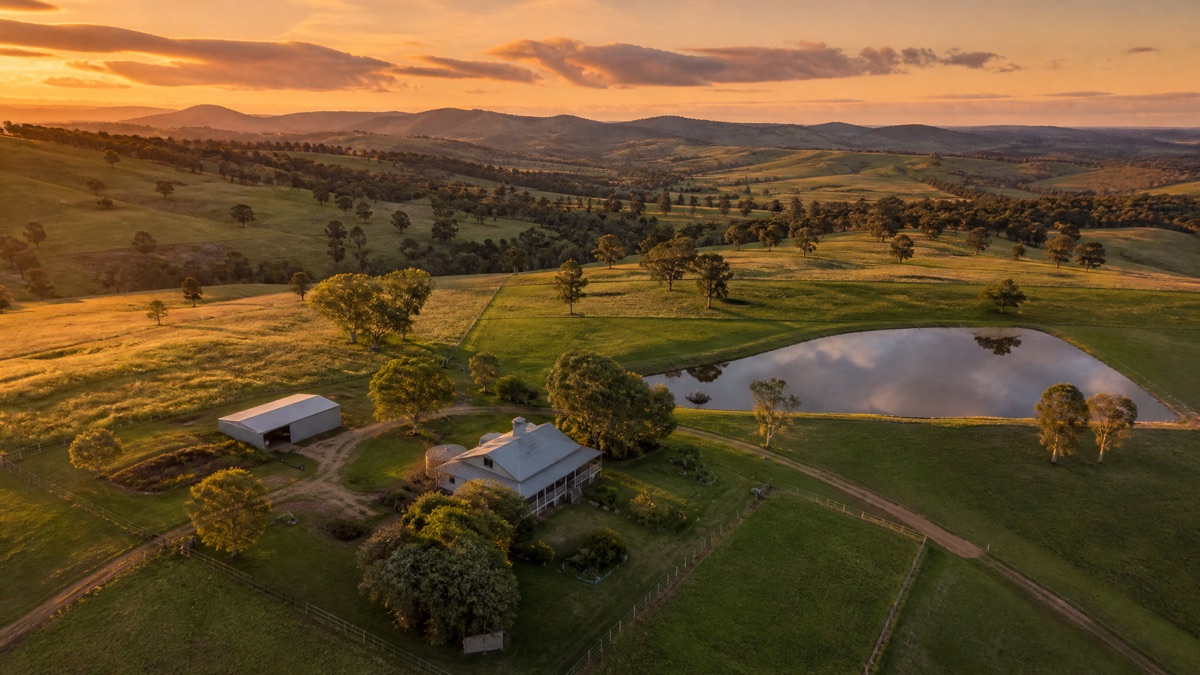
Rural, Acreage, and Lifestyle Property: The Buyers Agent's Guide to Water, Access, and Rural Due Diligence
Acreage purchases play by different rules. A rural due diligence framework covering water security, legal access, soil condition, services, bushfire risk, finance, and zoning.
Rural, Acreage, and Lifestyle Property: The Buyers Agent's Guide to Water, Access, and Rural Due Diligence
Tree changes and sea changes are no longer a pandemic-era blip; they are a structural feature of the Australian market. Every buyers agent working the fringes of the capital cities or the regions will eventually field the brief: five to fifty acres, a shed, maybe some horses, and a view. These purchases can be deeply rewarding for clients - and a minefield for the unprepared agent. Rural property plays by different rules on water, access, finance, and land use, and the standard metro due diligence checklist barely scratches the surface.
This guide sets out the due diligence framework for acreage, lifestyle blocks, and small rural holdings in Australia: what to check, who to call, and how to keep your client from buying a very expensive problem.
Why Rural Purchases Are a Different Discipline
In the suburbs, services are assumed. Water comes out of the tap, sewage disappears, the road out front is council's problem, and a bank will lend against almost anything with four walls. None of that is guaranteed on acreage. A rural property's value lives in things that are invisible from the driveway: water security, legal access, soil condition, and what the zoning actually permits. Two adjoining blocks that look identical from the gate can differ in value by hundreds of thousands of dollars once those factors are priced in.
Your job is to slow the client's emotional momentum - and acreage purchases are almost always emotional - long enough to verify the fundamentals.
Water: The First Question, Always
In most of inland Australia, water security is the single biggest determinant of rural land value. A beautiful block without reliable water is a camping ground, not a property.
Town water, tanks, and bores
Establish exactly where domestic water comes from. Reticulated town water on a rural block is a genuine premium feature. Rainwater tanks are the norm for the house supply; check total tank capacity against roof catchment and the region's rainfall, and inspect tank age and condition. Bores are common for stock and garden water; ask for the bore log, test the flow rate, and get a water quality analysis - salinity, hardness, and iron content vary enormously and some bore water is unsuitable even for gardens.
Water licences and allocations
Here is the trap that catches city buyers: in most states, water is a separate legal asset from the land. A bore, dam, or creek frontage does not automatically confer the right to take water for irrigation or commercial use. Check whether a water licence or allocation exists, whether it transfers with the property, its volume, and its reliability class. In regulated systems like the Murray-Darling Basin, entitlement registries are searchable, and the licence itself can be worth a substantial sum - or be entirely absent.
Dams, creeks, and riparian rights
Confirm dam capacity and condition, and whether any dam was constructed with the required approvals - oversized unapproved dams are a real liability. Creek frontage sounds idyllic but check flooding behaviour, erosion, and the rules on extraction from the waterway, which are tightly regulated in most catchments.
Soil, Land Condition, and Contamination
For lifestyle buyers the land is the point of the purchase, so its condition matters beyond the house yard:
- Soil health. Erosion gullies, compaction, salinity scalds, and weed infestations (blackberry, serrated tussock, lantana depending on region) are expensive, multi-year problems. Walk the whole block, not just the house surrounds.
- Contamination. Old sheep dips, fuel tanks, workshops, and chemical storage from past farming use can leave contaminated soil. Ask directly about historical uses, check state contaminated land registers, and where there is any doubt, price in an environmental assessment.
- Carrying capacity. If the client dreams of horses or cattle, get a realistic stocking-rate view from a local agronomist or rural agent. Two acres of improved pasture near the coast is very different from two acres of scrub.
Access, Roads, and Boundaries
Legal access
Confirm the property has legal, constructed access. Rural titles sometimes rely on unformed crown roads, paper roads, or easements across a neighbour's land. A block you can only reach by driving over someone else's paddock without a registered right of way is worth dramatically less and may be unfinanceable. Pull the title, check every easement, and physically drive the access in the wet if you can.
Road maintenance and school runs
Who maintains the road in? Several kilometres of unsealed private road or a shared driveway arrangement means ongoing cost and, occasionally, neighbour friction. For families, check school bus routes - their presence or absence reshapes daily life.
Boundaries and fencing
Fences in rural Australia are frequently not on the surveyed boundary. A survey may be money well spent on smaller acreage where boundaries are tight. Assess fencing condition honestly: a kilometre of stock-proof boundary fencing runs to many thousands of dollars, and under most state fencing laws, costs are shared with neighbours - which also means fence disputes are common. Check whether boundary fences are stock-proof for whatever the client intends to run.
Services and Infrastructure
- Power. Mains connection, or an expensive extension of the line to the building envelope? Off-grid solar and battery systems are common and workable, but assess system age, capacity, and replacement cost - a tired off-grid setup can be a $30,000-plus liability.
- Sewerage. Almost always on-site: septic tank, aerated wastewater treatment system, or composting toilet. Get the system inspected, confirm council approval records, and check the absorption area condition. Replacing a failed septic system is a five-figure job.
- Internet and phone. Fixed wireless or satellite NBN is the reality for many blocks; mobile coverage can be patchy to non-existent. For a client working from home, test it on site at the times they would actually work.
- Firewood, mail, and services. Deliveries, trades, and emergency services all cost more and take longer at distance. Clients should budget accordingly.
Bushfire, Flood, and Environmental Overlays
Bushfire risk is the defining hazard for most Australian acreage. Obtain the property's Bushfire Attack Level (BAL) assessment - it dictates construction standards for any new build or renovation and materially affects insurance premiums. Check fire history, vegetation management obligations, and whether the block has defendable space. Some councils impose asset protection zone requirements that constrain where the client can plant the garden they are dreaming of.
Flood mapping matters on creek flats and low country: check council flood overlays and historical flood imagery, not just the current season's appearance. Also review environmental overlays - significant vegetation, habitat corridors, and heritage listings can restrict clearing, building envelopes, and even grazing. Never assume a paddock can be cleared or a second dwelling added; check the planning scheme first.
Finance, Valuation, and Insurance
Rural lending is a different product. Many lenders cap loan-to-value ratios on properties above a certain hectare threshold - commonly around 10 to 50 hectares depending on the lender - and some treat hobby farms as commercial if there is any income-producing activity. Pre-clear the property type with the client's broker before offer stage; discovering a lender's hectare cap after exchange is a disaster.
Valuations are harder too. Comparable sales are sparse, and valuers apply wide judgement on land quality and improvements. Expect valuation shortfalls more often than in metro purchases, and keep the finance clause generous. Insurance deserves early attention: rural properties with bushfire exposure, old wiring, or off-grid power can be expensive or difficult to cover. Get an indicative premium during due diligence, not after settlement.
Zoning and Permitted Use
Rural zoning categories differ by state and council, and they control nearly everything: whether a second dwelling or farm stay cabin is permissible, whether the client can run a business from the shed, subdivide later, or clear vegetation. Check the council's local environmental plan or planning scheme for the zone objectives, minimum lot sizes for subdivision, and any development approvals attached to existing structures. Unapproved sheds and converted outbuildings are endemic on rural properties - verify what is approved and negotiate or regularise what is not.
Building the Right Advisory Team
No buyers agent can master every rural discipline. Build a regional bench: a conveyancer experienced in rural titles and water, a building inspector who understands farm structures, a local agronomist or rural consultant, and a broker who actually writes rural loans. Recommending specialists is not a weakness; it is precisely the professional judgement the client is paying for.
Frequently Asked Questions
How many acres does my client actually need?
Usually fewer than they think. Five well-watered, manageable acres delivers the lifestyle for most families; fifty acres of uncleared bush delivers a workload. Anchor the brief to intended use - horses, a big garden, privacy - rather than a round number.
Is a hobby farm a good investment?
As a financial asset, lifestyle acreage typically underperforms comparable capital city residential property over long periods, with thinner buyer pools on resale. Advise clients to buy it as a lifestyle decision with residual value, not as a growth strategy - unless there is a genuine development or subdivision angle.
Who pays for boundary fence replacement?
Most states have dividing fences legislation that shares the cost of a sufficient fence between adjoining owners, with notice and dispute processes. The details vary by state and by land type, so check the relevant Act before advising.
Can my client run a business or holiday cabins on rural land?
Possibly - but only if the zoning and council permit it, and often only with a development application. Never let a client buy on the assumption that a farm stay, kennels, or workshop business is allowed; get written planning advice first.
What is the single most skipped check on rural purchases?
Water. Clients fall in love with the view and the shed, and discover in year two that the bore runs dry in a normal summer. Verify the water supply like the purchase depends on it - because it does.
The Bottom Line
Rural and acreage purchases reward thorough, sceptical due diligence more than any other property type. Water security, legal access, soil condition, services, and zoning are the five pillars; verify each in writing before the client commits. Get it right and you have delivered a genuinely life-changing purchase - and a client who refers every friend who ever mentions a tree change.