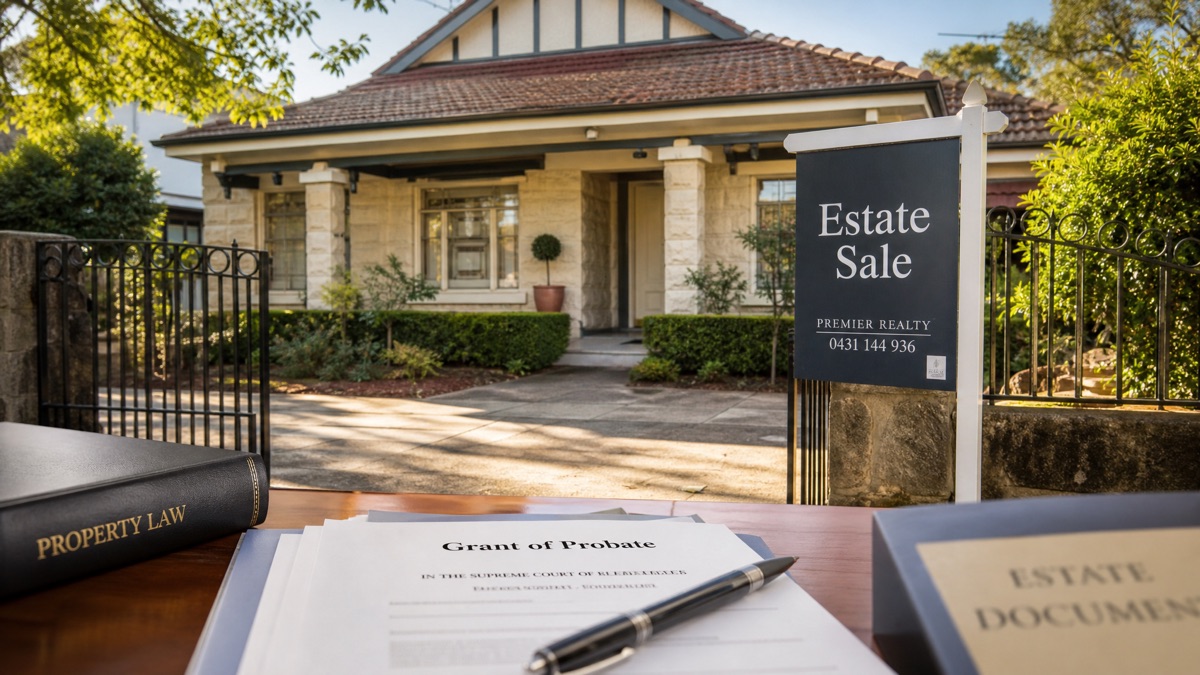
How Buyers Agents Navigate Deceased Estates and Probate Sales: Opportunity and Risk
Learn how buyers agents identify, assess, and negotiate deceased estate sales. Understand probate processes, due diligence essentials, title complexities, and timing challenges across Australian states.
How Buyers Agents Navigate Deceased Estates and Probate Sales: Opportunity and Risk
Deceased estates represent a unique segment of the Australian property market. For buyers agents, these properties often present opportunities for clients to secure homes below market value - but they also come with specific legal complexities, emotional dynamics, and timing challenges that require specialist knowledge.
Understanding how to identify, assess, and negotiate deceased estate sales is an essential skill for any buyers agent operating in Australia's competitive property market. This comprehensive guide covers everything you need to know about navigating probate sales on behalf of your clients.
Understanding Deceased Estates and Probate
When a property owner passes away, their estate - including real property - typically enters a legal process called probate. During probate, the Supreme Court of the relevant state grants authority to the executor named in the will (or an administrator if there is no will) to distribute the deceased's assets according to the will or intestacy laws.
Properties sold as part of a deceased estate can fall into several categories:
- Pre-probate sales: Properties marketed before probate is granted, subject to court approval
- Post-probate sales: Properties where the executor has full authority to sell
- Court-ordered sales: Properties where beneficiaries are in dispute and the court directs the sale
- Executor sales: Standard sales managed by the executor once probate is complete
Why Deceased Estates Come to Market
Beneficiaries typically sell inherited properties for several reasons:
- The property is not suitable for any beneficiary to occupy
- Multiple beneficiaries require the asset to be liquidated and proceeds distributed
- Estate debts and taxes need to be paid
- The executor wants to finalise the estate administration
- The property requires maintenance or renovation that beneficiaries cannot afford
These motivations often create selling pressure that savvy buyers agents can leverage for their clients.
Identifying Deceased Estate Opportunities
Not all deceased estate sales are advertised as such. Buyers agents need to develop skills in identifying these opportunities through multiple channels.
Marketing Indicators
Common signals that a property may be a deceased estate include:
- Language like 'estate sale', 'must be sold', or 'executor sale' in the listing
- Properties that appear dated or untouched for years
- Long-term ownership (20+ years) with no recent renovation
- Vendor listed as 'The Estate of...' or 'Executor for...'
- Auction or sale terms requiring court approval
Off-Market Channels
Many of the best deceased estate opportunities never reach public listing platforms. Experienced buyers agents cultivate relationships with:
- Estate lawyers and solicitors: Professionals handling probate often know about properties before they are listed
- Probate specialists: Law firms that specialise in estate administration
- Funeral directors: While ethically sensitive, some have connections to families dealing with estate property
- Senior living facilities: Staff may have early knowledge of residents who have passed
- Local agents: Agents who have been appointed by executors but not yet formally listed the property
The Legal Framework: State Differences
Probate law varies significantly across Australian states and territories. Buyers agents must understand the jurisdictional nuances that affect transaction timelines and conditions.
New South Wales
In NSW, probate is granted by the Supreme Court. Executors can apply for probate approximately 14 days after death. The process typically takes 2-3 months but can extend to 6-12 months in complex estates.
Properties can be sold before probate is granted, but the contract must be made conditional on probate being obtained. Settlement cannot occur until probate is finalised.
Victoria
Victoria's probate system operates through the Supreme Court of Victoria. The probate application can be lodged once a death certificate is issued. Processing times average 6-10 weeks for straightforward estates.
Executors in Victoria can exchange contracts before probate, but similar to NSW, settlement requires probate to be granted.
Queensland
Queensland has slightly faster probate processing, typically 4-8 weeks through the Supreme Court of Queensland. The state allows for 'Letters of Administration' for smaller estates, which can expedite the process.
Other States and Territories
South Australia, Western Australia, Tasmania, ACT, and Northern Territory each have their own probate processes administered through their respective Supreme Courts, with processing times ranging from 6 weeks to several months depending on estate complexity.
Assessing the Opportunity: Due Diligence Essentials
Deceased estate properties require enhanced due diligence. Many have been owned by elderly occupants for decades and may have deferred maintenance, building code issues, or title complications.
Property Condition Challenges
Common issues buyers agents encounter with deceased estates include:
- Outdated electrical wiring and plumbing systems
- Asbestos in pre-1990s builds
- Structural issues from lack of maintenance
- Overgrown gardens and pest infestations
- Non-compliant alterations or additions
- Hoarding or significant cleaning requirements
Always recommend comprehensive building and pest inspections, and factor renovation budgets into your client's purchasing strategy.
Title Complications
Deceased estates can have complex title situations:
- Multiple registered proprietors: Where the deceased was one of several owners
- Life estates: Where the deceased had a life interest only
- Unregistered interests: Claims by parties not on the title
- Family law matters: Where divorce or separation was incomplete at time of death
- Caveats: Lodged by beneficiaries or creditors claiming an interest
Engage a specialist property lawyer early to review the title and identify any red flags.
Negotiation Strategies for Deceased Estates
Negotiating deceased estate purchases requires sensitivity, patience, and strategic thinking. Buyers agents must balance commercial opportunism with respectful communication.
Understanding Executor Motivations
Executors are typically motivated by:
- Duty compliance: Executors have a legal obligation to achieve fair market value
- Finality: Many executors want to close the estate quickly to end their administrative burden
- Beneficiary pressure: Multiple beneficiaries may have conflicting opinions on sale strategy
- Expense reduction: Holding costs (rates, insurance, maintenance) eat into the estate
Structuring Your Offer
When representing buyers on deceased estate purchases, consider:
- Longer settlement periods: Offer 90-120 day settlement to accommodate probate delays
- Minimal conditions: Finance and building inspections are expected, but avoid overly complex special conditions
- Deposit flexibility: Some executors prefer higher deposits (10%) as it shows commitment
- Price certainty: Executors often prefer clean offers over complex price structures
Communication Protocol
When dealing with deceased estates:
- Always communicate through the listing agent or executor's solicitor - never contact beneficiaries directly
- Be respectful of the emotional context while remaining professional
- Document all communications in writing
- Be patient with delayed responses - executors are often juggling multiple estate responsibilities
- Avoid high-pressure tactics that could be perceived as exploiting grief
Contract Considerations and Special Conditions
Deceased estate contracts often include specific clauses that buyers agents must understand and negotiate carefully.
Common Special Conditions
Typical deceased estate contract conditions include:
- Subject to probate: The contract is conditional on the executor obtaining a grant of probate
- Subject to court approval: Some estate sales require Supreme Court approval before settlement
- No warranty on fixtures: Executors often sell properties 'as is' with no guarantee that fixtures and fittings work
- Vacant possession timeframes: May require additional time to clear the deceased's possessions
- No disclosure of defects: Executors may have limited knowledge of property condition issues
Buyer Protection Strategies
To protect your client's interests, ensure:
- The contract clearly states the probate condition with a reasonable timeframe (typically 120 days)
- Building and pest inspection conditions are comprehensive and allow for walk-away rights
- The contract specifies who pays holding costs during the probate period
- Title search reveals all registered interests and there is a plan to resolve any caveats
- Your client has finance pre-approval that extends beyond typical settlement periods
Timing and Settlement Challenges
Deceased estate transactions typically take significantly longer than standard property sales. Buyers agents must set clear expectations with clients about realistic timeframes.
Typical Timeline
A standard deceased estate purchase follows this approximate timeline:
- Weeks 0-2: Property identified, initial offer and negotiation
- Weeks 2-4: Contract exchange (subject to probate)
- Weeks 4-16: Probate application and approval process
- Weeks 16-18: Pre-settlement inspections and final preparation
- Week 18-20: Settlement
Complex estates with disputes or title issues can extend this to 12+ months.
Managing Client Expectations
Educate your clients that:
- They will likely need to maintain finance approval for an extended period
- The executor may receive competing offers during the probate period
- In some cases, the executor may be legally required to test the market even after accepting an offer
- Probate delays are largely outside your control
- Having an experienced conveyancer or solicitor is essential
Ethical Considerations for Buyers Agents
Working with deceased estates involves navigating sensitive family situations. Maintaining high ethical standards protects your reputation and your client's interests.
Best Practice Guidelines
- Transparency: Fully disclose to your client all known issues with the property and transaction
- Fair value: While seeking a good deal for your client, avoid exploitative low-ball offers
- Respect: Remember that the property represents someone's life and family memories
- Professionalism: Maintain professional boundaries with grieving families
- Documentation: Keep meticulous records of all communications and advice given
Case Study: Navigating a Complex Probate Sale
Sarah, a Melbourne-based buyers agent, identified an opportunity for her client in a deceased estate in Camberwell. The property had been owned by the same family for 45 years and had significant renovation potential.
The Challenges
The estate had four beneficiaries across three states, no will, and required Letters of Administration. The property had deferred maintenance issues including asbestos, outdated wiring, and structural concerns.
The Strategy
Sarah worked with a specialist probate lawyer to understand the likely timeline (estimated 6-9 months). She structured an offer that included:
- A 120-day settlement period conditional on administration being granted
- A building inspection condition that identified $85,000 in essential repairs
- A price that factored in renovation costs but remained within acceptable range for the administrator
- A higher-than-usual deposit (10%) to demonstrate serious intent
The Outcome
After 8 months, administration was granted. Sarah's client purchased the property for $1.24 million - approximately 12% below comparable renovated properties in the area. After investing $180,000 in renovations, the property was valued at $1.65 million, delivering immediate equity of $210,000.
Tools and Resources for Buyers Agents
Effective deceased estate work requires access to specialist resources and networks.
Essential Contacts
- Probate solicitors in your operating areas
- Building inspectors experienced with heritage and older properties
- Conveyancers who specialise in complex title issues
- Asbestos assessors and remediation specialists
- Estate clearance companies (for post-purchase cleaning)
Research Tools
- Supreme Court records: Most states publish probate grants which can be searched
- Title office searches: Regular monitoring for caveat lodgements can indicate estate disputes
- Land value monitoring: Properties with static land values over 10+ years may indicate elderly ownership
- Rate notices: Can sometimes reveal information about ownership duration
FAQ: Deceased Estates and Probate Sales
Can a property be sold before probate is granted?
Yes, in most Australian states, a contract can be exchanged before probate is granted. However, the contract must be made conditional on probate being obtained, and settlement cannot occur until probate is finalised. The executor can market the property and negotiate offers, but cannot legally transfer title until they have the grant of probate or letters of administration.
Are deceased estate properties always cheaper than market value?
Not always. While deceased estates can present opportunities for below-market purchases, executors have a legal duty to achieve fair market value for beneficiaries. Properties in desirable locations or in good condition may still achieve full market price or more at auction. The best opportunities are typically properties requiring renovation or those where executors are motivated by speed over price.
What happens if beneficiaries disagree on the sale?
When beneficiaries cannot agree, the executor may need to apply to the Supreme Court for directions. The court can order the sale of the property to distribute proceeds among beneficiaries. These court-directed sales can take significantly longer (12-24 months) and may involve the property being sold by public auction or tender as specified by the court.
Who pays for repairs discovered after contract exchange?
Deceased estate contracts typically include an 'as is' clause, meaning the executor provides no warranty about the property's condition. Any defects discovered during the building inspection period should be addressed before the inspection condition expires - either through price renegotiation, requesting repairs, or exercising your right to terminate if the condition allows. Once the building inspection condition is waived or expires, the buyer generally bears responsibility for repairs.
How do I verify that the person selling has authority?
Always request a copy of the grant of probate or letters of administration before proceeding to contract. Your solicitor should verify that the named executor matches the person signing the contract. For pre-probate contracts, request evidence that the probate application has been lodged with the Supreme Court. Never proceed with a deceased estate purchase without proper legal verification of the seller's authority.
What if the property is sold but probate is never granted?
If probate is not granted within the conditional period specified in the contract (typically 90-120 days, extendable by mutual agreement), the contract becomes void and the purchaser's deposit is returned in full. This is why the probate condition is essential for buyer protection. Some buyers agents negotiate an extension clause that allows either party to extend the probate condition for an additional period rather than the contract automatically lapsing.
Can deceased estate sellers offer vendor finance?
Generally no. Executors typically cannot offer vendor finance because their duty is to realise estate assets and distribute proceeds to beneficiaries as quickly as reasonably possible. Vendor finance arrangements would delay distribution and create ongoing administrative obligations that conflict with the executor's role. However, in rare cases where all beneficiaries agree and the court approves, vendor finance may be possible - but this is extremely uncommon.
Are deceased estates more likely to have title issues?
Deceased estates can have higher rates of title complexity, particularly properties owned for many decades. Common issues include unregistered easements, old caveats, boundaries that do not match current surveys, and claims by parties not on the title. Engaging a solicitor to conduct a thorough title search early in the process is essential. Many buyers agents include a title review by their solicitor as a condition before making an offer on deceased estates.
Key Takeaways for Buyers Agents
Deceased estate and probate sales represent a significant opportunity segment of the Australian property market. Success requires:
- Understanding the legal framework and state-specific probate processes
- Building relationships with estate lawyers, solicitors, and other professionals in the probate ecosystem
- Enhanced due diligence skills to identify property condition and title risks
- Patience and flexibility with extended timeframes
- Ethical negotiation that balances client advocacy with respect for grieving families
- Clear client communication about realistic expectations and potential delays
By developing expertise in deceased estate purchases, buyers agents can deliver exceptional value to clients while navigating one of the market's most complex but rewarding transaction types. The properties that others overlook due to probate complexity often represent the best opportunities for savvy buyers supported by knowledgeable agents.