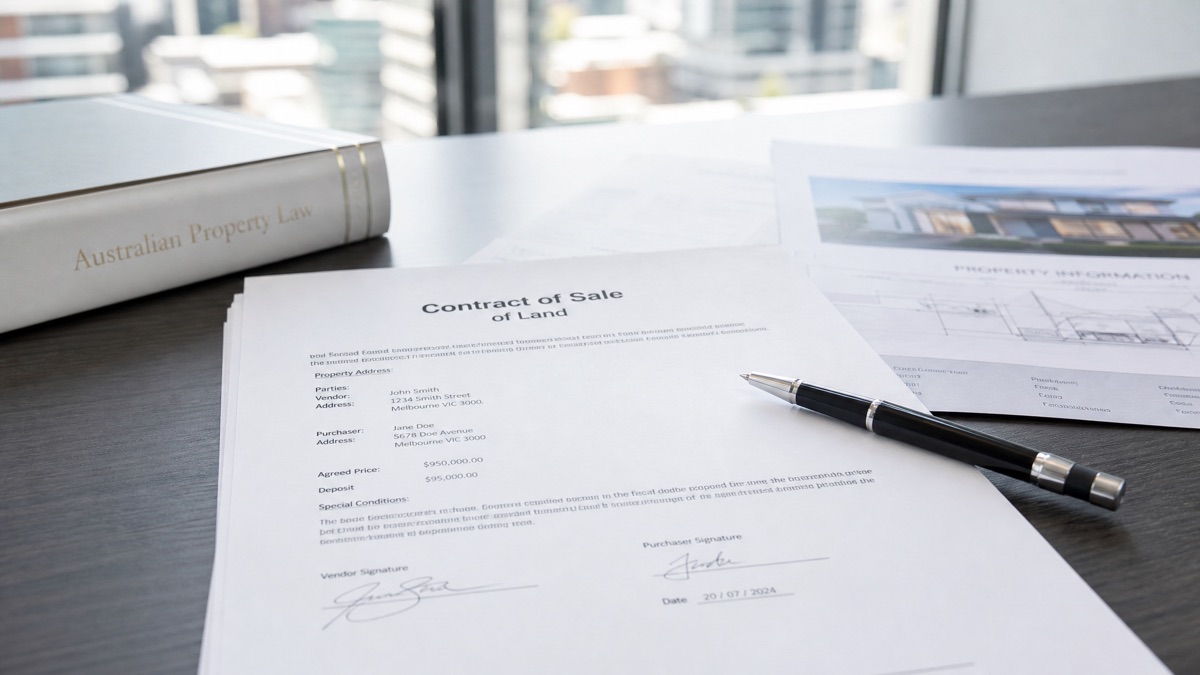
Understanding Contract Conditions and Special Clauses: The Buyers Agent's Guide to Protecting Your Clients
Protect your clients with expert contract knowledge. Learn critical conditions, dangerous vendor clauses, state-specific requirements, and negotiation strategies that prevent costly mistakes.
Understanding Contract Conditions and Special Clauses: The Buyers Agent's Guide to Protecting Your Clients
The moment a buyer signs a contract of sale, they're legally bound to complete the purchase under the agreed terms. As a buyers agent, your job isn't just finding the right property - it's ensuring the contract protects your client's interests. One poorly negotiated clause or overlooked condition can cost your client tens of thousands of dollars, delay settlement, or even result in them purchasing a property they can no longer afford.
This comprehensive guide will walk you through the critical contract conditions and special clauses that every buyers agent must understand, negotiate, and advise on to protect clients throughout the Australian property purchasing process.
Why Contract Conditions Matter More Than Most Buyers Agents Realise
Finding a great property at the right price means nothing if the contract exposes your client to unacceptable risk. Consider these real scenarios:
- A client exchanges contracts subject to finance, but the condition is worded so poorly that the bank's valuation coming in $50K under purchase price doesn't allow them to exit the contract
- A settlement date is locked in with no flexibility, but the client's property sale falls through - they're forced to complete or lose their deposit
- A "subject to building inspection" clause requires the buyer to prove defects are structural, which they can't do - they're stuck buying a property with $80K in remediation needed
- A special condition inserted by the vendor's solicitor requires the buyer to accept all easements and encumbrances "whether registered or not" - the client discovers an unregistered right of way three months after settlement
These aren't hypothetical disasters - they're scenarios that happen to buyers who don't have proper representation reviewing contracts. Your job is ensuring they don't happen to your clients.
Standard vs Special Conditions: Understanding the Framework
Australian property contracts typically follow state-based standard templates with two sections:
Standard Conditions (The Base Contract)
These are pre-printed terms that apply to all sales in that state unless specifically amended:
- Vendor's obligation to provide good title
- Purchaser's obligation to complete settlement
- Default provisions and remedies
- Settlement adjustment calculations
- GST provisions (for commercial property)
- Risk and insurance obligations
Standard conditions are generally fair to both parties. Problems arise when special conditions modify or contradict these standard terms.
Special Conditions (The Danger Zone)
These are custom clauses added to address specific circumstances. They can:
- Protect buyers (finance clause, building inspection clause)
- Protect vendors (accepting property "as is," excluding items from sale)
- Modify standard terms (changing settlement periods, varying deposit amounts)
- Address unusual situations (subject to DA approval, subject to tenant vacating)
Critical rule: Special conditions override standard conditions. A single special condition can completely change the risk profile of a contract. Never assume standard conditions apply if special conditions exist.
The Non-Negotiable Contract Conditions Every Client Needs
Unless your client is an experienced cash buyer purchasing at auction, certain protective conditions should be included in every contract you negotiate on their behalf.
1. Subject to Finance Condition
This is the most critical protection for buyers relying on bank lending. It allows the buyer to exit the contract if they can't obtain suitable finance.
Standard Finance Clause Wording (Acceptable)
"This contract is subject to the purchaser obtaining finance approval for a loan of $X at an interest rate not exceeding Y% per annum within Z days of the contract date. If finance is not approved by this date, either party may rescind the contract."
Dangerous Finance Clause Wording (Reject This)
"This contract is subject to finance approval on terms acceptable to the purchaser's solicitor."
Why this is dangerous: "Acceptable to the purchaser's solicitor" gives too much discretion and courts may find the buyer acted unreasonably. Banks almost always approve finance - but with conditions that might make it unaffordable (higher rate, lower LVR, shorter term). The clause needs to specify acceptable terms upfront.
Best Practice Finance Clause
"This contract is subject to the purchaser obtaining unconditional loan approval from a licensed Australian lender for:
- Loan amount: $X or Y% of purchase price
- Interest rate: Not exceeding Z% per annum
- Loan term: Minimum 30 years
- Approval deadline: 21 days from contract date (or 14 days in hot markets)
- If approval is not obtained by the deadline, the purchaser may rescind by written notice within 2 business days of the deadline, and the deposit will be refunded in full."
Critical Details to Negotiate
- Timeframe: 14 days is tight, 21 days is standard, 30 days is generous. In competitive markets, vendors may only accept 14 days
- Valuation clause: Add "including the property being valued at or above the purchase price" to protect against low valuations
- Exit notice period: Ensure buyers have 2-3 business days after the deadline to formally rescind if finance isn't approved
2. Subject to Building and Pest Inspection
This protects buyers from purchasing properties with significant structural issues or pest damage.
Weak Building Inspection Clause (Avoid)
"Subject to purchaser obtaining a satisfactory building and pest inspection within 14 days."
Why this is weak: "Satisfactory" is subjective. Vendor can argue minor defects don't justify rescission. Courts often side with vendors if buyers try to exit over cosmetic issues.
Strong Building Inspection Clause (Use This)
"This contract is subject to the purchaser obtaining a building and pest inspection report within 14 days that does not identify:
- Any structural defects or safety hazards
- Any evidence of termite activity or termite damage
- Any defects that would cost more than $5,000 (or other agreed threshold) to rectify
If the inspection report identifies any of these issues, the purchaser may:
- (a) Rescind the contract by written notice within 3 business days of receiving the report, OR
- (b) Request the vendor rectify the defects at the vendor's cost, OR
- (c) Renegotiate the purchase price to account for rectification costs
If the parties cannot agree on rectification or price adjustment within 7 days, either party may rescind."
Why This Works
- Specific triggers (structural defects, termites, cost threshold) make the condition objective
- Gives buyers three options, not just rescission
- Provides clear timeframes for all parties
- Reduces likelihood of disputes about what constitutes "unsatisfactory"
3. Subject to Solicitor/Conveyancer Review
Often overlooked but incredibly important, especially for off-market or private treaty sales.
Recommended Wording
"This contract is subject to the purchaser's solicitor reviewing and approving the contract terms and vendor disclosures within 5 business days. If the solicitor advises the purchaser not to proceed, the purchaser may rescind by written notice within this period."
Why you need this: Solicitors may identify title issues, easements, zoning restrictions, or unfair clauses that the buyers agent missed. This is your safety net.
Vendor resistance: Some vendors refuse this condition, arguing the buyer should have legal advice before signing. In hot markets, you may need to waive this. If so, get legal advice before exchange, not after.
The Critical Timing Conditions: Settlement and Deposit
Settlement Date Flexibility
A rigid settlement date is dangerous for buyers who need to sell their existing property first or who have uncertain finance approval timelines.
Inflexible Settlement Clause (High Risk)
"Settlement shall occur on [fixed date] at 2:00pm. Time is of the essence."
Risk: If the buyer can't settle on that exact date (sale falls through, finance delayed, conveyancer unavailable), they're in breach. The vendor can rescind, forfeit the deposit, and potentially sue for damages if they've incurred costs.
Flexible Settlement Clause (Much Safer)
"Settlement shall occur on [date] or such other date as mutually agreed by the parties in writing. The purchaser may extend settlement by up to 30 days upon 7 days' written notice to the vendor."
Alternative for buyers selling their property: "Settlement shall occur 30 days after the settlement of the purchaser's property at [address], or [maximum date], whichever is earlier."
Deposit Amounts and Payment Terms
Standard deposit is 10% of purchase price, but this is negotiable.
Options for Buyers with Limited Deposits
- Lower initial deposit: "5% deposit payable on exchange, with the remaining 5% payable 30 days prior to settlement"
- Deposit guarantee: Some buyers use deposit guarantee insurance instead of cash (costs approximately 1-1.5% of deposit amount)
- Delayed payment: "Deposit of 10% payable 7 days after exchange" - gives buyers time to access funds
Critical clause to include: "Deposit to be held in trust by the vendor's solicitor (or licensed real estate agent trust account) and only released upon settlement or agreement of both parties."
Watch out for: Clauses allowing vendors to use the deposit for their own purchase before settlement. This creates risk if the vendor's purchase falls through - your client's deposit could be tied up or at risk.
Dangerous Vendor-Favourable Clauses to Reject or Modify
Experienced vendor solicitors insert protective clauses that shift risk to the buyer. Your job is spotting and negotiating these.
1. "As Is, Where Is" Clauses
Dangerous Wording
"The purchaser accepts the property in its current condition, 'as is, where is,' with all faults, and waives any right to claim for defects or deficiencies of any kind."
What this means: The buyer has almost no recourse if they discover major defects after settlement. Even structural issues or safety hazards may not allow them to claim against the vendor.
How to Modify
"The purchaser accepts the property in its current condition subject to:
- (a) The vendor's warranties that all building work complies with relevant building codes and approvals
- (b) The purchaser's right to conduct building and pest inspections as per Special Condition X
- (c) The vendor's obligation to disclose any known material defects
If the vendor refuses to modify and insists on strict "as is" wording, your client MUST have comprehensive building, pest, and structural inspections before waiving cooling off or signing unconditional.
2. Fixtures and Fittings Exclusions
Problematic Wording
"The following items are excluded from the sale: all light fittings, curtains, blinds, air conditioning units, dishwasher, garden shed, and outdoor furniture."
Why this is a problem: Buyers often assume these items are included. Discovering after settlement that the vendor removed items they expected can be frustrating and expensive.
Best Practice
Include a detailed chattels schedule listing what's included and what's excluded:
"The following items are INCLUDED in the sale: all fixed light fittings, window coverings (curtains and blinds), built-in wardrobes, dishwasher (model XYZ), rangehood, garden shed, letterbox, and outdoor clothesline.
The following items are EXCLUDED from the sale: all pot plants, outdoor furniture, freestanding furniture, and artwork."
Your role: During property inspections, photograph all fixtures and fittings. Cross-reference with the contract. If valuable items (chandeliers, high-end appliances, custom blinds) aren't mentioned, get written confirmation they're included.
3. Easements and Encumbrances "Deemed Acceptable"
Dangerous Clause
"The purchaser accepts the property subject to all easements, covenants, and encumbrances registered or unregistered, and acknowledges these do not materially affect the property's use or value."
Risk: This clause forces buyers to accept restrictions they haven't seen or evaluated. Unregistered easements (not shown on title) might include rights of way, drainage easements, or utility access that significantly impacts the property.
How to Counter
"The purchaser accepts the property subject to easements and encumbrances as disclosed in the attached title search and Section 32 statement, provided these do not materially restrict the purchaser's intended use of the property for residential purposes. The vendor warrants there are no unregistered easements, covenants, or encumbrances affecting the property."
Critical action: Review the Section 32 (Vic), Form 1 (Qld), Contract for Sale disclosure (NSW), or equivalent state disclosure document carefully. If easements exist, assess their impact. A drainage easement through the backyard might prevent building a pool or extension.
4. "Subject to Existing Tenancies"
Common for investment properties but needs careful wording.
Vague Wording (Risky)
"The property is sold subject to existing tenancies."
Problems:
- What's the rent amount? Is it market rate or below?
- What's the lease term? Fixed or periodic?
- When can the buyer take possession if they want to occupy?
- Are there any rent arrears or tribunal orders?
- Is the bond lodged correctly?
Proper Tenancy Clause
"The property is sold subject to an existing tenancy on the following terms:
- Tenant name: [Name]
- Rental amount: $X per week
- Lease term: [Fixed term ending DATE] or [Periodic]
- Bond amount: $X (lodged with [relevant authority])
- Rent paid to: [current date]
- No rent arrears or tribunal disputes
The vendor will provide a copy of the signed lease agreement and bond lodgement receipt before settlement. The vendor assigns all rights under the tenancy agreement to the purchaser at settlement."
Your due diligence: Request copy of the lease, bond lodgement receipt, and last three months' rent payment records. Verify the tenant is actually paying the stated rent and there are no disputes.
State-Specific Conditions You Must Understand
Each Australian state has unique contract requirements and cooling-off period rules.
Victoria
- Cooling off: 3 business days for private treaty sales (not auctions)
- Section 32: Mandatory vendor disclosure statement (must be provided before contract signing)
- Deposit: If buyer rescinds during cooling off, vendor can retain 0.2% of purchase price
- Building inspection: Not mandatory but highly recommended
New South Wales
- Cooling off: 5 business days for private treaty sales (not auctions)
- Contract disclosure: Contract must include zoning certificate, sewer/water diagram, draft plan (for off-plan purchases)
- Deposit: If buyer rescinds during cooling off, vendor can retain 0.25% of purchase price
- Sunset clause: For off-the-plan purchases, mandatory sunset clause (typically 12-18 months)
Queensland
- Cooling off: 5 business days for private treaty sales (not auctions)
- Form 1: Mandatory disclosure form including title search, survey plan, pool safety certificate
- Deposit: If buyer rescinds during cooling off, vendor can retain 0.25% of purchase price
- Pool safety: Vendor must provide compliant pool safety certificate if property has a pool
South Australia
- Cooling off: 2 business days for contracts under $500K (not auctions)
- Form 1: Mandatory vendor disclosure statement
- Deposit: Cooling off rescission forfeits $100
Western Australia
- Cooling off: None for residential property sales
- Offer and acceptance: Contracts typically structured as offer and acceptance (not exchange)
- Finance clause: Critical since no cooling off period
Tasmania
- Cooling off: None for residential property sales
- Finance and inspection clauses: Essential protections since no cooling off
Critical takeaway: In WA and TAS where there's no cooling off, you MUST include finance and building inspection conditions unless your client is a very experienced cash buyer.
Advanced Special Conditions for Complex Purchases
Subject to Development Approval (DA)
For buyers purchasing with intention to develop, subdivide, or substantially renovate:
"This contract is subject to the purchaser obtaining development approval from [Council name] for [description of intended development] within [timeframe, typically 6-12 months]. If approval is not obtained, or is obtained with conditions unacceptable to the purchaser acting reasonably, the purchaser may rescind."
Key considerations:
- Timeframe must be realistic (DAs can take 6-18 months depending on council and complexity)
- "Acting reasonably" prevents buyers from rescinding over minor conditions
- Consider making settlement conditional on DA approval rather than just contract conditional
Subject to Sale of Existing Property
For buyers who must sell their current home to fund the new purchase:
"This contract is subject to the purchaser entering into an unconditional contract for the sale of their property at [address] by [date]. If this condition is not satisfied, the purchaser may rescind by written notice within 2 business days of the deadline."
Vendor resistance: Most vendors don't like this condition as it creates uncertainty. They may:
- Require a shorter deadline (e.g., 30 days)
- Include an "escape clause" allowing them to accept backup offers
- Negotiate a higher purchase price to compensate for the uncertainty
The "Escape Clause" (Benefits Vendors)
"If the vendor receives another acceptable offer during the conditional period, the vendor may give the purchaser 48 hours' written notice to waive this condition or the contract becomes void."
This gives buyers first right but doesn't lock vendors out of the market completely.
Staged Settlement for Vacant Possession
When vendors need time to vacate or are building their next property:
"Settlement shall occur in two stages:
- Stage 1: [Date] - Legal title transfers to purchaser, 80% of purchase price paid
- Stage 2: [Later date] - Vendor provides vacant possession, remaining 20% paid, purchaser takes physical possession
During the interim period, the vendor shall pay the purchaser an occupation fee of $X per week and maintain comprehensive insurance."
Risk management: This arrangement creates risk for buyers (they own a property they can't occupy) and vendors (they're occupying a property they no longer own). Only use when necessary and ensure:
- Interim period is clearly defined (maximum 3-6 months)
- Occupation fee compensates buyer fairly
- Insurance obligations are clear
- Penalties for delayed vacation are specified
Due Diligence Checklist: What to Review Before Your Client Signs
Before recommending your client sign any contract, work through this checklist:
Title and Ownership
- Title search shows vendor as registered owner
- No unexpected caveats, mortgages, or restrictions
- Easements are acceptable and disclosed
- Boundaries match property inspection and marketing materials
Disclosure Documents
- Section 32 (VIC), Form 1 (QLD), Contract disclosure (NSW) provided and reviewed
- Zoning is suitable for intended use
- No proposed special levies or significant strata issues (for units)
- Pool safety certificate current (QLD)
- Building permits and occupancy certificates for recent renovations
Financial Terms
- Purchase price is correct and clearly stated
- Deposit amount and payment timing are manageable
- GST implications understood (for new property or commercial)
- Settlement adjustments for rates, strata, rent are fair
Protective Conditions
- Finance clause included (unless cash buyer)
- Building and pest inspection clause included
- Settlement date is achievable with flexibility if needed
- Solicitor review clause included (if possible)
Special Conditions
- All special conditions reviewed by client's solicitor
- No "as is" clauses without professional inspections
- Fixtures and fittings clearly documented
- Any vendor-favourable clauses negotiated or understood
Practical Matters
- Keys, alarm codes, and access arrangements confirmed for settlement
- Final inspection walk-through scheduled before settlement
- Utility connections and account transfers arranged
- Insurance (building and contents) organised from settlement date
Common Contract Negotiation Scenarios
Scenario 1: Hot Market, Multiple Offers
Vendor position: "We have three other offers. We'll only accept unconditional contracts or very short conditional periods."
Your strategy:
- Recommend pre-approval for finance before making offer
- Conduct building and pest inspections before offer if possible
- Offer 7-day finance clause instead of 21-day
- Waive solicitor review clause if you've already had legal advice
- Don't waive building inspection unless you're very confident in the property condition
Scenario 2: Buyer Needs Long Settlement
Your client: "I need 90 days to settle because I'm selling my current property."
Vendor position: "We want 45 days maximum."
Negotiation approach:
- Offer higher deposit (15% instead of 10%) to compensate for longer settlement
- Provide evidence your client's property is already under contract
- Agree to penalty interest if settlement delays beyond agreed date
- Compromise at 60-75 days with flexibility clause
Scenario 3: Property Has Defects Identified in Building Report
Building report: Identifies $30,000 in rectification works (stumping, roof repairs, termite treatment).
Your options:
- Request vendor rectify: "The purchaser requests the vendor complete all repairs identified in the attached building report before settlement"
- Request price reduction: "The purchaser requests a $30,000 reduction in purchase price to account for required repairs"
- Split the difference: "The purchaser proposes a $15,000 price reduction, with the purchaser accepting responsibility for the remaining repairs"
- Rescind: If works are too extensive or vendor won't negotiate, exercise the building inspection clause to exit
Vendor's likely response: They'll usually prefer price reduction over completing repairs themselves (avoids delays and quality disputes).
Red Flags That Should Stop You Signing
Some contract issues are so serious you should advise clients not to proceed without resolution:
Critical Red Flags
- Title defects: Vendor doesn't appear on title, caveats from unknown parties, boundary disputes
- Undisclosed major issues: Structural damage, illegal building work, significant pest damage hidden until after exchange
- Vendor insolvency: Vendor is bankrupt or in liquidation (contract may be void)
- Misrepresentation: Marketed as 4 bedrooms but title shows it's a 3-bedroom with unauthorised addition
- Zoning problems: Current use is illegal under zoning (e.g., operating as boarding house in residential-only zone)
- Unreasonable special conditions: Conditions that completely override standard protections and leave buyer with no recourse
In these situations, either negotiate resolution before signing or walk away. No property is worth entering a contract that exposes your client to unacceptable risk.
Working with Solicitors and Conveyancers
As a buyers agent, you're not a legal expert - nor should you pretend to be. Your role is:
- Identifying potential issues for legal review
- Negotiating commercial terms (price, settlement date, deposit)
- Coordinating between client, solicitor, and vendor's agent
- Ensuring conditions protect your client's interests
When to Involve Solicitors
- Before exchange: All contracts should be reviewed by client's solicitor before signing
- Complex properties: Development sites, commercial property, off-the-plan, properties with complex title issues
- Unusual conditions: Any special condition you're not 100% confident about
- Disputes: If vendor won't agree to reasonable protective conditions
Building Strong Solicitor Relationships
Partner with 2-3 experienced property solicitors who:
- Provide fast turnaround (24-48 hours for contract review in competitive markets)
- Understand buyers agency work and don't compete with you
- Communicate clearly with clients in plain language
- Are pragmatic about risk (some solicitors are overly cautious and kill good deals)
Recommend specific solicitors to clients rather than leaving them to find their own. Clients who use inexperienced or slow solicitors lose opportunities in competitive markets.
FAQ: Contract Conditions and Special Clauses
Can buyers rescind during the cooling-off period for any reason?
Yes, in states that have cooling-off periods (VIC, NSW, QLD, SA), buyers can rescind for any reason or no reason. However, they forfeit a small percentage of the purchase price (0.2-0.25% in most states). Cooling-off doesn't apply to auction purchases or if waived in writing.
What happens if a buyer can't meet a finance clause deadline?
If the buyer hasn't obtained finance by the deadline, they must either: (1) Formally rescind the contract using the finance clause, typically within 1-2 days of the deadline, or (2) Proceed unconditionally. If they don't rescind and later can't settle, they're in breach and can lose their deposit plus face damages claims.
Can vendors refuse to include a building inspection clause?
Yes, particularly in competitive markets or auction scenarios. If a vendor refuses, buyers should conduct inspections before making an offer or factor inspection risk into their maximum price. Never recommend waiving building inspections on older properties, renovated properties, or properties with visible concerns.
What's a reasonable timeframe for a finance clause?
14 days is tight but acceptable in hot markets, 21 days is standard, 30 days is generous. The timeframe should account for: bank processing times (7-10 days minimum), property valuation (2-3 days), and potential delays. In current banking environment, 21 days is recommended.
What if a building inspection finds minor defects?
Minor defects (worn carpet, small cracks, dated fixtures) don't usually justify rescinding under a building inspection clause. Courts interpret "satisfactory" or "material defects" narrowly. Your clause should specify monetary thresholds (e.g., defects costing more than $5,000 to rectify) to make it objective.
Can buyers change their mind after signing a contract?
Only if: (1) They're within cooling-off period and haven't waived it, (2) A conditional clause allows rescission (finance, building inspection), (3) The vendor agrees to release them (unlikely without compensation), or (4) The vendor has breached the contract. Otherwise, they're legally bound and must complete or forfeit deposit plus potential damages.
What does "subject to solicitor approval" actually protect against?
It gives your solicitor time to review: title defects, unreasonable special conditions, disclosure document issues, zoning problems, or other legal concerns. It doesn't protect against buyers simply changing their mind or finding a better property. The solicitor must identify a legitimate legal concern to advise rescission.
Should investors accept properties "subject to existing tenancies" without seeing the lease?
Never. Always review: the signed lease agreement, rent amount and payment history, lease term and expiry date, bond lodgement receipt, any tribunal orders or disputes, and condition reports. A tenant paying $50/week below market on a 3-year fixed lease significantly affects the investment return.
What's the difference between a "condition precedent" and a "condition subsequent"?
Condition precedent: Must be satisfied before the contract becomes binding (e.g., subject to finance). If not satisfied, the contract becomes void. Condition subsequent: Contract is binding, but certain events must occur before settlement (e.g., vendor must provide vacant possession). If not satisfied, the other party can seek compensation or rescission.
Can special conditions override standard contract terms?
Yes. Special conditions take precedence over standard printed terms. This is why vendor-drafted special conditions can be dangerous - they might exclude warranties or protections in the standard contract. Always read special conditions carefully and get legal advice if they modify fundamental terms.
Conclusion: Contracts Are Where Good Deals Become Bad Deals
Finding the right property at the right price is only half the job. Ensuring the contract protects your client's interests is equally critical. A poorly negotiated contract can turn a great purchase into a financial disaster.
Your competitive advantage as a buyers agent isn't just market knowledge and property selection - it's understanding contracts well enough to protect clients through every scenario. Master contract conditions and special clauses, build relationships with quality solicitors, and develop the judgment to know when to negotiate hard and when to walk away.
The best buyers agents don't just find properties - they structure deals that protect clients and give them certainty throughout the purchasing process. That's what earns referrals and builds long-term client relationships.