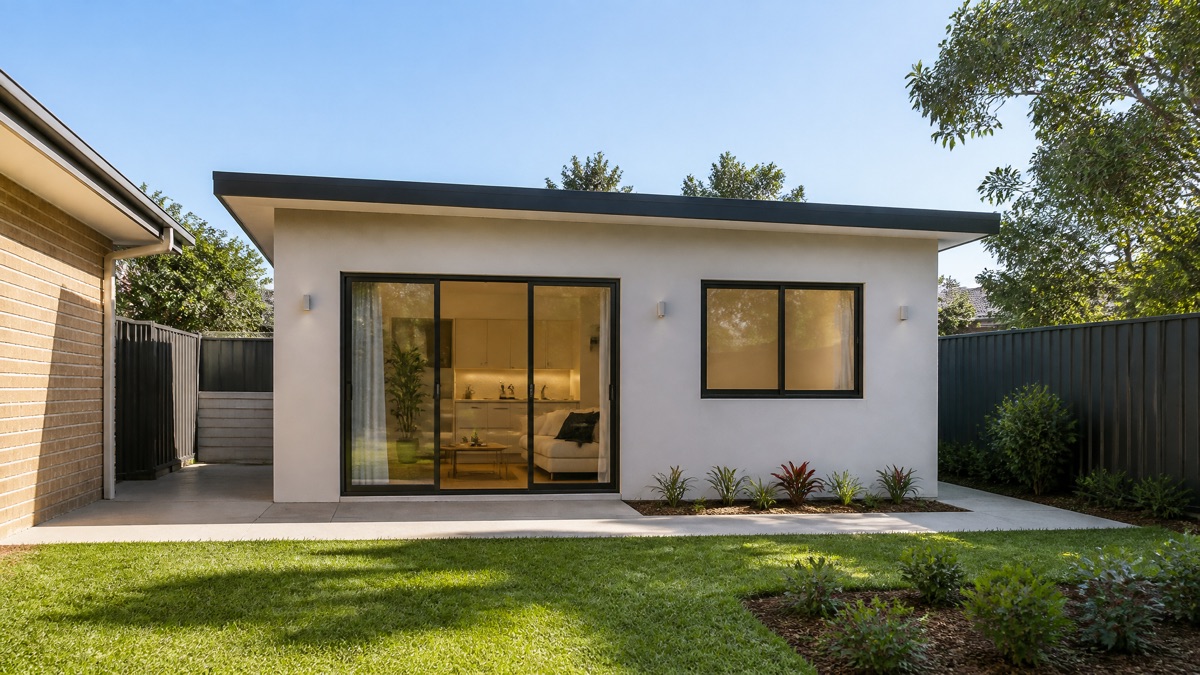
The Buyers Agent's Guide to Granny Flats and Secondary Dwellings: Approval Rules and Investment Value
A state-by-state breakdown of granny flat and secondary dwelling planning rules in Australia, plus realistic construction costs, rental returns, and the due diligence buyers agents need before recommending the strategy.
The Buyers Agent's Guide to Granny Flats and Secondary Dwellings: Approval Rules and Investment Value
Granny flats - known formally in most jurisdictions as secondary dwellings or ancillary dwellings - have become one of the most discussed strategies for boosting rental yield and extracting value from an existing property. For buyers agents advising clients on investment properties, understanding the planning rules, construction costs, and genuine investment case for secondary dwellings is essential, because the opportunity varies enormously between states and even between local council areas within the same state.
This guide covers what qualifies as a secondary dwelling, the approval pathways across Australian states, realistic costs and returns, and the key due diligence steps buyers agents should run before recommending a property for its granny flat potential.
What Is a Secondary Dwelling?
A secondary dwelling is a self-contained residence located on the same lot as a primary dwelling, with its own kitchen, bathroom, and living space, but typically not able to be subdivided or sold separately from the main house. Most states impose a maximum floor area (commonly 60 to 70 square metres) and require the secondary dwelling to be held under the same title as the principal dwelling, with restrictions on separate strata titling in many jurisdictions.
Secondary dwellings differ from a dual occupancy or duplex, which typically involves two separate, often subdividable, titles or strata lots and is subject to a different planning pathway.
Approval Pathways by State
Planning rules for secondary dwellings vary significantly across Australia, and buyers agents should never assume rules are consistent between states or even between neighbouring councils.
New South Wales
Secondary dwellings (granny flats) are permitted under the Affordable Rental Housing State Environmental Planning Policy (now part of the Housing SEPP) in most residential zones, subject to a minimum lot size (typically 450 square metres, though this varies by council) and a maximum floor area of 60 square metres. Many applications qualify for complying development certificate (CDC) approval through a private certifier, which is significantly faster than a standard development application through council.
Victoria
Victoria permits a dependent person's unit or small second dwelling under ResCode (Clause 52.23 for small second dwellings), generally capped around 60 square metres, with eligibility varying by zone. Some councils have been more restrictive than the state framework suggests, so local planning scheme overlays need checking property by property.
Queensland
Queensland permits secondary dwellings (often capped at 80 square metres, more generous than NSW and Victoria) but importantly restricts them from being rented to a tenant unrelated to the occupants of the main house in many council areas - the dwelling must generally house a family member. Some councils, including Brisbane, have provisions allowing broader rental use under certain conditions, so this must be confirmed before assuming a secondary dwelling can be leased on the open market.
South Australia
SA permits ancillary dwellings, generally up to 60 square metres, under relatively permissive planning rules following reforms aimed at boosting housing supply, with many applications eligible for complying development approval.
Western Australia
WA allows ancillary dwellings (commonly up to 70 square metres) under the Residential Design Codes, usually assessed by local government, with rules on parking, setbacks, and private open space that vary by council.
Tasmania and the Territories
Tasmania permits ancillary dwellings under state planning provisions with generally straightforward approval pathways. The ACT and Northern Territory have their own specific secondary residence provisions, generally requiring development approval with attention to plot ratio and site coverage limits.
Key Due Diligence Before Recommending a Granny Flat Strategy
Buyers agents should run through a structured checklist before advising a client that a property is suitable for a secondary dwelling investment strategy:
Confirm Minimum Lot Size
Most jurisdictions set a minimum lot size for secondary dwelling eligibility. A property just under the threshold cannot support a secondary dwelling regardless of how much physical space appears available in the backyard.
Check Zoning and Overlays
Heritage overlays, flood overlays, bushfire-prone land designations, and environmental significance overlays can all restrict or add significant cost to secondary dwelling construction. A title and planning certificate search should be run before any purchase decision is made on the basis of granny flat potential.
Assess Site Access and Services
Can a builder physically access the rear of the block with machinery? Is there separate or adequate capacity for electrical, water, and sewer connections? Narrow side access or a block with existing structures crowding the rear yard can add tens of thousands of dollars to a project that looked straightforward on paper.
Verify Parking and Setback Requirements
Most councils require an additional car parking space for a secondary dwelling and impose minimum setbacks from boundaries and the primary dwelling. These requirements can materially reduce the buildable footprint on a smaller block.
Confirm Rental Restrictions
As noted above, some states and councils restrict secondary dwellings to use by family members only, which eliminates the open-market rental income case entirely. Buyers agents must confirm this before modelling any rental yield uplift for a client.
Realistic Costs and Returns
Construction costs for a granny flat in Australia typically range from approximately $120,000 to $220,000 for a one or two-bedroom unit as at 2026, depending on finishes, site conditions, and region - though buyers agents should always direct clients to obtain current, project-specific quotes rather than relying on generic figures. Costs can escalate significantly where a block requires retaining walls, extensive excavation, bushfire construction standards, or complex services relocation.
On the return side, secondary dwellings in metropolitan areas with strong rental demand can achieve rents broadly comparable to a one or two-bedroom unit in the local area, which in many markets can meaningfully improve the overall gross yield of a property compared to the main house alone. However, buyers agents should model this conservatively, accounting for:
- Total construction cost including council fees, connections, driveway or access works, and landscaping - not just the headline build quote.
- Increased land tax exposure in states that assess land tax on total site value, which can be relevant for investors holding multiple properties.
- Ongoing dual-occupancy management costs, including separate water and electricity metering where required, and additional wear on a shared driveway or access.
- Potential impact on resale market depth - a property with a granny flat appeals to a narrower buyer pool (predominantly investors) than a standard single-dwelling family home, which can affect the exit strategy.
When a Granny Flat Strategy Makes Sense
Secondary dwelling additions tend to work best for clients who intend to hold the property long term as a cash-flow focused investment, in markets where secondary dwelling rentals are genuinely in demand (close to universities, hospitals, transport hubs, or employment precincts) and where local council rules clearly permit open-market rental use. It is generally a less compelling strategy for clients focused primarily on capital growth in premium, owner-occupier dominated markets, where a secondary dwelling may not add proportional resale value and could even detract from street appeal in some buyer segments.
Common Mistakes Buyers Agents Should Help Clients Avoid
- Assuming granny flat rules are the same everywhere - always verify against the specific council and zone.
- Underestimating total project cost by relying on advertised "from" prices that exclude site works, approvals, and connections.
- Failing to confirm the secondary dwelling can legally be rented to an unrelated tenant in jurisdictions with family-occupancy restrictions.
- Overlooking the impact of a secondary dwelling on future resale appeal and buyer pool depth.
- Not checking whether existing structures (sheds, pools, easements) on the block will interfere with the buildable envelope for a secondary dwelling.
Frequently Asked Questions
Can a granny flat be sold separately from the main house?
In most Australian states, no. Secondary dwellings are generally required to remain on the same title as the primary dwelling and cannot be subdivided or strata titled separately, although some reforms in certain states are beginning to explore limited subdivision pathways. Buyers agents should confirm current rules with the relevant state planning department before advising clients otherwise.
Do I need council approval to build a granny flat?
Most states offer a fast-tracked approval pathway (such as a complying development certificate in NSW) for secondary dwellings that meet standard criteria, but approval is still required. Projects that do not meet standard criteria, or that are affected by overlays such as heritage or flooding, generally require a full development application through council.
Will a granny flat increase my property's land tax?
Land tax in most states is assessed on the total unimproved land value of the site, not per dwelling, so adding a secondary dwelling does not directly increase land tax, though the overall value of the holding (and therefore the tax liability) may rise over time with any resulting increase in land value.
Can I rent a granny flat on Airbnb or short-term rental platforms?
This depends on both state planning rules and local council short-term rental regulations, which have tightened in many areas. Buyers agents should treat short-term rental income as a bonus scenario to verify locally, not a baseline assumption in any investment model.
Is a granny flat a good strategy for first-time property investors?
It can be, provided the investor has sufficient capital buffer for construction cost overruns and understands the narrower resale buyer pool. Buyers agents should ensure clients model worst-case construction costs and vacancy scenarios before committing capital to this strategy.