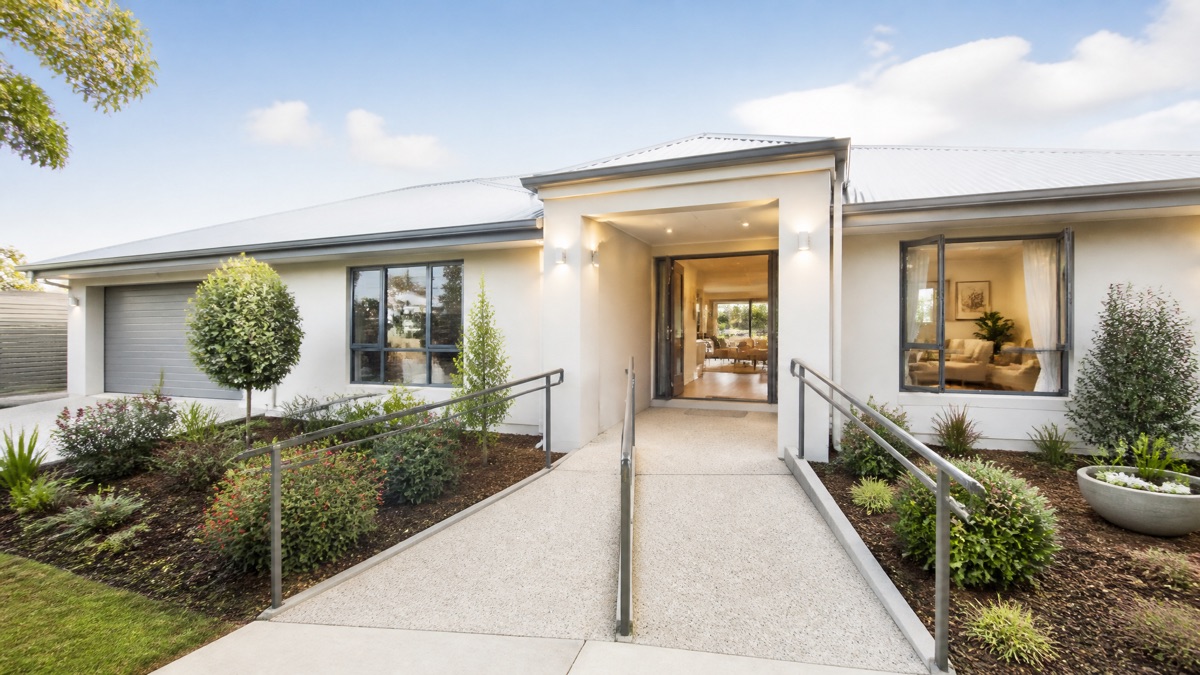
The Buyers Agent's Guide to NDIS and Specialist Disability Accommodation (SDA) Property Investment
How buyers agents can help investor clients evaluate NDIS Specialist Disability Accommodation opportunities, from design standards and SDA payment categories to tenancy risk and due diligence.
The Buyers Agent's Guide to NDIS and Specialist Disability Accommodation (SDA) Property Investment
Specialist Disability Accommodation, known in the sector simply as SDA, has grown into a distinct asset class within the Australian property investment landscape. Funded through the National Disability Insurance Scheme, SDA properties are purpose-built or modified homes designed for participants with extreme functional impairment or very high support needs. For buyers agents, SDA represents both an opportunity and a minefield of specialised requirements that differ substantially from any other residential or investment purchase you will handle.
This guide covers what buyers agents need to understand before advising a client toward SDA investment, including design categories, funding mechanics, tenancy risk, and the due diligence steps that protect your client from an illiquid, high-compliance asset that does not perform as promised.
What SDA Actually Is
SDA is not simply an accessible home. It is a defined category of housing built or modified to a specific National Disability Insurance Agency (NDIA) design standard, intended for a narrow cohort of NDIS participants who have SDA funding approved in their individual plan. Properties fall into four design categories: Improved Liveability, Fully Accessible, Robust, and High Physical Support, each with distinct building specifications covering things like ceiling hoist provisions, reinforced walls, wider doorways, emergency power backup, and acoustic treatments.
Investors are paid an SDA payment by the NDIA (via the participant's plan) for making the dwelling available, on top of any standard tenancy rent the participant pays. This payment is what generates the above-market yields often advertised for SDA investment - but those yields come with conditions that are easy to misunderstand.
Why the Yield Numbers Can Mislead Clients
Developers and SDA-focused sales channels frequently advertise yields of 10 to 15 percent, calculated on the assumption of full, continuous occupancy from day one. In reality, SDA properties are only income-generating once a participant with approved SDA funding and a compatible support package actually moves in - and that match-making process, usually facilitated by a Support Coordinator or SDA provider, can take months or longer, especially in markets with limited qualified tenants.
Your job as a buyers agent is to pressure-test these projected yields against realistic vacancy assumptions, not the marketing material's best-case scenario. Ask directly: what is the track record of this specific provider or developer in filling comparable dwellings in this specific region, and how long did it take?
Location Risk Is Different for SDA
Standard property due diligence looks at suburb growth drivers, schools, transport, and amenity. SDA due diligence needs an additional, very specific layer: is there actual demand for this design category in this location? The NDIA publishes SDA demand data by Statistical Area, showing how many participants with SDA funding in their plan are in each region relative to existing supply. A High Physical Support dwelling built in a region with no unmet demand for that category is a vacant, non-performing asset regardless of build quality.
Before recommending any SDA opportunity, pull the current NDIS SDA demand and supply data for the specific SA3 or SA4 region and compare it honestly against the proposed design category. This single step prevents the most common and costly SDA investment mistake.
New Build Versus Existing Dwelling Modification
SDA opportunities generally come in two forms: purpose-built new dwellings constructed to SDA design standard from the ground up, and existing homes modified to meet one of the design categories. New builds typically attract higher SDA payment rates (since the NDIA pricing framework rewards new, purpose-built stock) but carry construction and settlement timing risk similar to any off-the-plan purchase, with the added complexity of SDA design certification needing to be achieved before the dwelling can be registered and start earning payments.
Modified existing dwellings can enter the market faster but may attract lower payment tiers and face more scrutiny from SDA assessors over whether the retrofit genuinely meets category requirements. Either path requires your client to budget for the gap period between settlement (or construction completion) and the first SDA payment actually landing.
Understanding the Provider Relationship
Most SDA investors do not self-manage. They engage an SDA provider who handles participant matching, compliance with the SDA Practice Standards, ongoing registration with the NDIS Quality and Safeguards Commission, and often the tenancy management itself. This provider relationship is arguably as important as the property itself - a strong provider with deep relationships to Support Coordinators and Local Area Coordinators in the region will fill vacancies faster and manage compliance more reliably than a provider with limited track record.
As a buyers agent, you are not licensed to recommend specific SDA providers as a financial product, but you can and should flag to clients that provider due diligence (through their financial adviser or directly) is just as critical as the property due diligence you are conducting.
Compliance and Registration Risk
An SDA dwelling must be enrolled with the NDIS Quality and Safeguards Commission and meet ongoing building and fire safety compliance specific to the design category. If a property loses its SDA enrolment - due to a compliance failure, a change in regulations, or a failed audit - it stops generating SDA payments immediately, and the client is left holding an asset that may be difficult to sell to a standard owner-occupier market given its specialised fitout.
This illiquidity is one of the most important things to communicate clearly to clients before they commit. SDA properties are a long-hold, specialised asset. They are not easily sold at short notice, and the buyer pool for a highly modified SDA dwelling is small.
Financing Considerations
Not all lenders are comfortable financing SDA properties, particularly purpose-built dwellings with unusual floor plans or modifications that reduce appeal to a standard owner-occupier. Clients should confirm finance in principle with a broker experienced in SDA lending before committing to a contract, since a standard residential valuation may undervalue the property relative to its income-generating capacity, or the lender may apply a more conservative loan-to-value ratio given the asset's specialised nature.
How Buyers Agents Should Scope an SDA Engagement
Given the specialised nature of SDA, consider the following when structuring your service for a client interested in this asset class:
- Set expectations on scope: Be clear that you can evaluate the property, location demand data, and general investment soundness, but provider selection and NDIS compliance detail may need a specialist SDA adviser alongside your advice.
- Demand data first: Always start with NDIS demand and supply data for the region before inspecting any specific property, to avoid wasting time on mismatched design categories.
- Vacancy-adjusted yield modelling: Present clients with a realistic range of outcomes, not just the marketed best case, including a scenario where the match-making period extends well beyond initial projections.
- Exit strategy conversation: Discuss illiquidity openly before the client commits, including what a resale process might realistically look like in five or ten years.
Red Flags to Watch For
Be alert to SDA opportunities that are heavily marketed through investment seminars promising guaranteed returns, developments built speculatively in a design category with no corresponding regional demand data, and providers unwilling to share their historical vacancy and fill-rate performance. Genuine, well-structured SDA opportunities are backed by transparent data and a provider with a verifiable track record - if either is missing or vague, treat the opportunity with real caution regardless of how compelling the headline yield appears.
Frequently Asked Questions
Can any investor buy an SDA property?
Yes, SDA properties can be purchased by any investor, including through an SMSF in some structures, but the investment only generates SDA income once an eligible NDIS participant with SDA funding actually occupies the dwelling.
How long does it typically take to fill an SDA vacancy?
This varies enormously by region and design category, ranging from a few months in high-demand areas with an established provider to well over a year in regions with limited demand or oversupply of a particular category. Always ask the provider for region-specific historical data rather than accepting a generic average.
Do SDA payments increase over time?
SDA pricing is reviewed periodically by the NDIA as part of its annual pricing arrangements, which can adjust payment rates up or down based on policy settings. This should be factored into long-term yield projections as a variable, not a fixed figure.
What happens if the participant moves out?
The provider typically works to match a new eligible participant to the vacancy, but there is no guarantee of continuous occupancy, and a vacancy period with no SDA payment should be expected and budgeted for between tenancies.
Is SDA investment suitable for a first-time property investor?
Generally not recommended as a first investment property given its complexity, illiquidity, and reliance on specialised market dynamics. It suits investors who already have a diversified portfolio and are comfortable with a long-hold, higher-complexity asset.
Should a buyers agent inspect an SDA property the same way as a standard home?
No, inspection should include verification against the specific design category's building standard (hoist provisions, doorway widths, emergency power, acoustic treatment) in addition to standard structural and condition checks, ideally with input from an assessor familiar with SDA certification requirements.