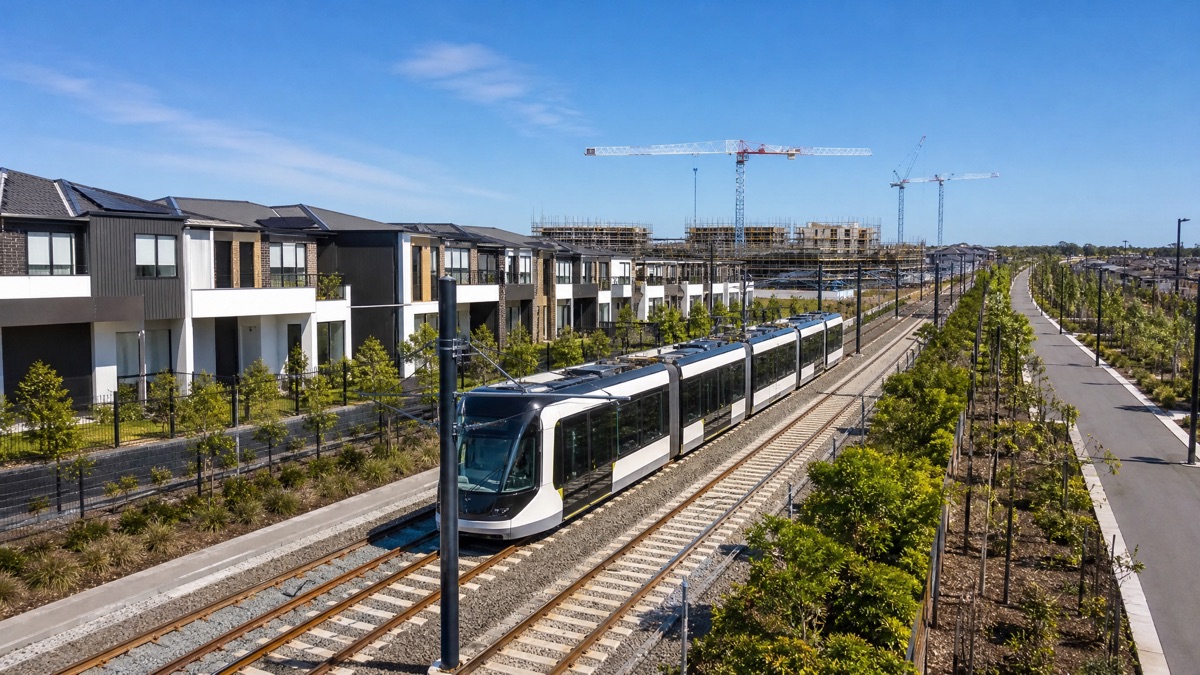
The Buyers Agent's Guide to Buying Near Major Infrastructure: Timing Purchases Around Transport and Urban Renewal
A buyers agent guide to timing property purchases around major transport infrastructure and urban renewal projects, covering the infrastructure premium cycle, pipeline research, and common buyer mistakes.
The Buyers Agent's Guide to Buying Near Major Infrastructure: Timing Purchases Around Transport and Urban Renewal
Few factors move suburban property values as reliably as a new train line, light rail corridor, motorway upgrade, or major urban renewal precinct. Infrastructure investment reshapes commute times, retail catchments, and amenity almost overnight in planning terms, and the suburbs that benefit can see price growth well ahead of the broader market. For buyers agents, understanding how to read infrastructure pipelines, time a purchase against a project's delivery stages, and separate genuine growth corridors from speculative hype is a genuine point of difference in client advice.
This guide covers how to track infrastructure projects, the stages of the "infrastructure premium" cycle, the risks of buying too early or too late, and a practical framework for advising clients who want to ride a growth corridor rather than chase one after prices have already moved.
Why Infrastructure Moves Property Prices
New or upgraded infrastructure changes the fundamental value proposition of a location in three ways: it reduces effective commute time to employment hubs, it increases amenity and walkability (particularly around new transport stations), and it often triggers rezoning and increased density that brings fresh retail, services, and employment to the area. Buyers respond to all three, and the market tends to price in anticipated benefits well before a project opens, which is exactly why timing matters so much.
Classic Australian examples include the price uplift along Sydney's Metro Northwest corridor in the years before opening, the transformation of suburbs along Melbourne's Metro Tunnel route, and the long-running value growth around new motorway interchanges on Brisbane's outskirts. In each case, the pattern was similar: modest early gains when the project was announced and funded, a stronger run as construction visibly progressed, and further repricing once the asset opened and the benefit became tangible to everyday buyers.
The Four Stages of the Infrastructure Premium Cycle
Stage One: Announcement and Business Case
This is the earliest and riskiest stage. A government releases a business case, a corridor study, or a budget commitment, but funding may not be locked in, routes can change, and delivery timeframes are frequently optimistic. Prices may tick up slightly on speculation, but a buyers agent advising a client to buy purely on an announcement needs to flag the real possibility of project delay, descoping, or outright cancellation. Not every announced project gets built on the originally announced alignment or timeline.
Stage Two: Funding Committed and Route Locked
Once a project has confirmed funding in a state or federal budget, a locked alignment, and planning approvals underway, the risk profile improves substantially. This is often the stage where the smartest infrastructure-focused buying happens - the project is real enough to de-risk the purchase, but construction has not yet started to visibly disrupt the area or draw broad market attention. Prices in affected suburbs typically start a steady climb from this point.
Stage Three: Construction Underway
Visible construction brings both costs and opportunities. On one hand, nearby amenity can be disrupted by noise, dust, road closures, and reduced street appeal during the build - this can suppress short-term buyer interest and create a window for well-informed buyers to purchase existing stock at a relative discount before completion. On the other hand, media coverage and public awareness typically increase during this phase, which can also attract more buyer competition as the finish line becomes visible.
Stage Four: Opening and Post-Completion Repricing
When the infrastructure opens, the benefit becomes real and tangible rather than anticipated. This typically triggers a further repricing as the market fully absorbs the improved commute times and amenity. By this stage, much of the easy gain has often already been captured by earlier buyers, though well-located pockets can continue to perform for years as the broader precinct matures, new retail and services arrive, and population catches up to the improved accessibility.
Reading the Infrastructure Pipeline
Buyers agents need reliable, primary sources rather than media speculation to assess where a project genuinely sits in its delivery cycle. Key sources include:
- State infrastructure strategies and pipelines: Each state publishes a rolling infrastructure plan (Infrastructure NSW, Infrastructure Victoria, Building Queensland, and equivalents) that lists committed, funded, and proposed projects with indicative timeframes.
- State and federal budget papers: Confirm whether a project has allocated funding in the forward estimates, not just a political announcement.
- Precinct and structure plans: Local and state planning authorities release precinct plans for growth corridors and renewal areas, detailing proposed zoning changes, density uplifts, and staging.
- Development application activity: A surge in DA lodgements near a proposed station or interchange is a leading indicator that developers believe the project will proceed and are positioning to capture the uplift.
- Project delivery authority updates: Major projects typically have a dedicated delivery authority or agency publishing construction progress and milestone updates.
Common Mistakes Buyers Agents See Clients Make
Buying Too Early on Pure Speculation
Clients sometimes want to buy in a corridor the moment a project is mentioned in the news, without confirmed funding or route certainty. The risk here is real: projects get shelved, rerouted, or indefinitely delayed, and a client who paid a speculative premium for proximity to a line that never eventuates has effectively overpaid for nothing.
Overestimating Walking Distance Value
Not every property within a suburb affected by new infrastructure benefits equally. The premium is typically concentrated within an 800 metre to 1.2 kilometre walking catchment of a new station, with value tapering quickly beyond that. A buyers agent should map actual walking routes, not straight-line distance, since topography, highways, and lack of pedestrian infrastructure can make a property "close" on a map but a 20 minute walk in reality.
Ignoring Construction-Phase Disruption
Some clients are surprised by years of construction noise, traffic changes, and reduced amenity before a project delivers its benefit. This needs to be discussed honestly, particularly for owner-occupier clients who will live through the disruption rather than simply holding an investment.
Assuming All Infrastructure Is Equal
A new heavy rail station has a different value impact to a bus interchange upgrade or a road-widening project. Buyers agents need to calibrate client expectations to the scale and nature of the specific infrastructure, not treat all "infrastructure-adjacent" opportunities the same.
A Practical Framework for Advising Clients
When a client is interested in an infrastructure-driven purchase, a buyers agent should work through a structured assessment:
- Confirm the project stage using primary sources - is funding locked, is the route confirmed, has construction started?
- Map the realistic benefit catchment based on walking routes and likely station or interchange locations, not suburb boundaries.
- Check zoning and planning overlays for the catchment to understand whether density uplift and rezoning are also part of the story.
- Assess current pricing against comparable corridors that have already completed similar infrastructure, to gauge how much of the expected uplift may already be priced in.
- Stress-test the delivery timeline - what happens to the client's investment thesis if the project is delayed two or three years?
- Consider the client's holding horizon - a client who needs to sell within three years is taking on more project-timing risk than one with a ten-year horizon.
Urban Renewal Precincts: A Related but Distinct Opportunity
Beyond transport, major urban renewal precincts - former industrial land, port areas, or government land being rezoned and redeveloped - follow a similar but distinct value cycle. These precincts often combine new transport access with new housing supply, employment hubs, and public realm improvements. Examples across Australian capitals include waterfront redevelopment precincts and former rail yard or industrial conversions. Buyers agents assessing these opportunities need to additionally consider staging risk (renewal precincts can take fifteen to twenty years to fully build out), oversupply risk from large-scale new apartment stock, and the quality and funding certainty of promised public amenity like parks and schools.
Balancing Infrastructure Potential With Fundamentals
Infrastructure proximity is a powerful value driver, but it should never override the fundamentals of good property selection: land value, building quality, livability, and genuine owner-occupier or tenant appeal. A buyers agent's job is to layer infrastructure analysis on top of sound fundamental due diligence, not substitute one for the other. The best outcomes come from properties that would be good purchases on their own merits and happen to also sit in the path of genuine, well-funded infrastructure improvement.
Frequently Asked Questions
How early should I buy ahead of a new train station or transport line?
The best risk-adjusted entry point is typically once funding is locked and the route or station locations are confirmed, but before construction has caused the market to broadly reprice. Buying purely on announcement carries meaningful delay and cancellation risk.
How far from a new station does the price premium typically extend?
Most studies and market observation suggest the strongest premium sits within an 800 metre to 1.2 kilometre walking catchment, tapering beyond that. Always assess actual walking routes rather than straight-line distance.
Does construction disruption actually create a buying opportunity?
It can. Reduced short-term buyer interest due to noise, dust, and road changes sometimes allows well-informed buyers to secure existing stock at a relative discount ahead of project completion, provided the project's funding and delivery are not in doubt.
Can infrastructure projects be cancelled or delayed after announcement?
Yes, regularly. Many announced projects change scope, route, or timeline, and some are shelved entirely. This is why confirming funding commitment and planning approval status matters more than media announcements.
Is infrastructure-driven growth guaranteed?
No. Infrastructure improves the fundamentals of a location but does not guarantee price growth on its own - broader market conditions, supply levels, and the quality of the specific property still matter. Infrastructure should be treated as one input into a broader due diligence process, not a standalone investment thesis.
How do urban renewal precincts differ from standalone transport projects?
Urban renewal precincts typically combine transport access with large-scale rezoning, new housing supply, and public realm investment, and can take considerably longer to fully build out - often fifteen to twenty years. This brings additional staging and oversupply considerations that a standalone transport upgrade may not carry.