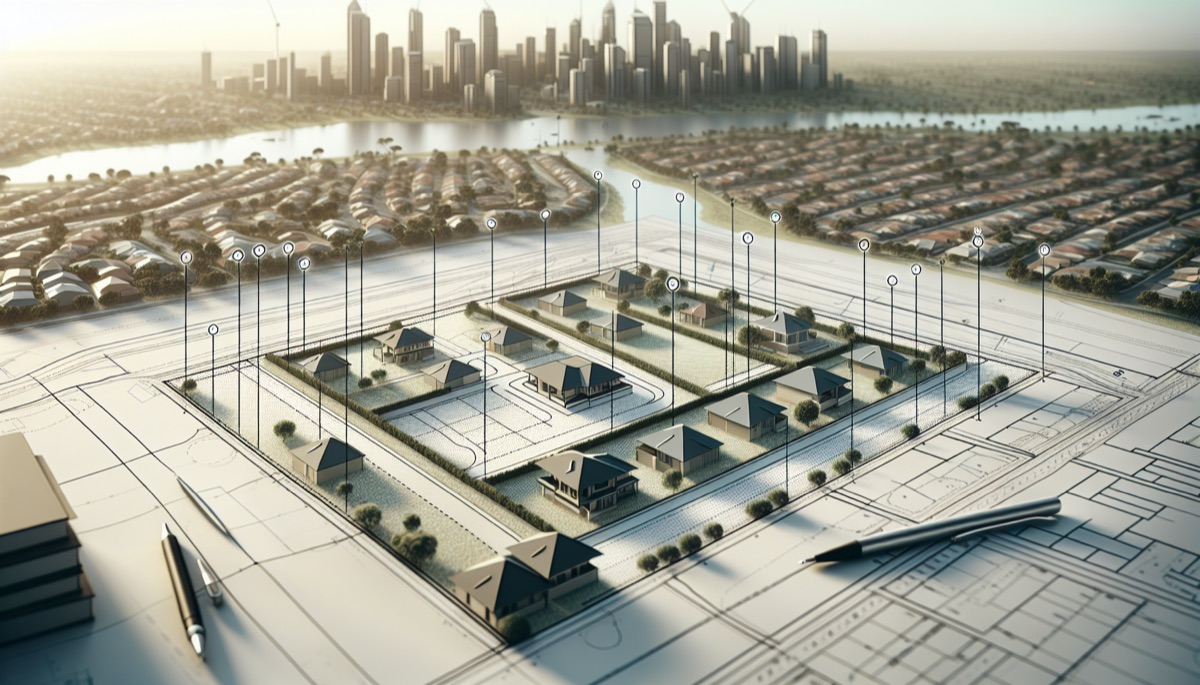
Zoning, DA Potential, and Development Feasibility: How Buyers Agents Add Value Beyond the Purchase
Understanding zoning regulations, development application potential, and council planning schemes transforms buyers agents from search services into strategic advisors who deliver long-term wealth creation through hidden development opportunities.
Zoning, DA Potential, and Development Feasibility: How Buyers Agents Add Value Beyond the Purchase
Most buyers agents focus on finding properties that meet a client's immediate needs: bedrooms, bathrooms, location, and price. But the best buyers agents in Australia go deeper, identifying properties with hidden upside through zoning analysis, development potential, and future feasibility. This expertise transforms a buyers agent from a search service into a strategic advisor who delivers long-term wealth creation.
Understanding zoning regulations, development application (DA) potential, and council planning schemes is no longer optional for buyers agents who want to compete at the highest level. This guide breaks down how to assess development feasibility, communicate planning potential to clients, and position yourself as the buyers agent who sees opportunities others miss.
Why Development Potential Matters to Buyers
Whether your client is an investor, owner-occupier, or developer, development potential directly impacts property value and future flexibility. A block zoned for dual occupancy is worth more than an identical block limited to single dwelling. A property with subdivision potential offers an exit strategy or wealth unlock that standard purchases don't.
Buyers agents who understand zoning can:
- Identify undervalued properties with development upside
- Negotiate better prices by highlighting planning constraints sellers haven't considered
- Advise clients on value-add strategies post-purchase
- Differentiate their service from competitors who only search real estate portals
The Investor Perspective
Investors increasingly prioritize properties with subdivision, dual occupancy, or granny flat potential. These strategies allow them to unlock equity, improve rental yields, or create multiple income streams from a single asset. A buyers agent who can identify and validate these opportunities becomes indispensable.
The Owner-Occupier Angle
Owner-occupiers benefit from development potential even if they never act on it. A property with DA-approved plans for a second dwelling offers flexibility for aging parents, adult children, or future resale value. Highlighting this potential during the search phase positions you as a forward-thinking advisor.
Understanding Australian Zoning: The Basics
Zoning regulations vary across local councils, states, and territories, but the fundamentals are consistent. Zoning dictates what can be built on a property, including dwelling types, height limits, setbacks, and land use.
Common Residential Zones
Each state uses slightly different terminology, but the core residential zones include:
- Low Density Residential (R1, RU1): Single dwellings, limited subdivision
- Medium Density Residential (R2, R3): Dual occupancy, townhouses, some unit development
- High Density Residential (R4): Apartments, multi-storey buildings
- Mixed Use: Residential and commercial uses permitted
- Rural Residential: Larger blocks with lifestyle and agricultural uses
Buyers agents must verify zoning through council planning portals or certificates, not assumptions based on neighboring properties. Two adjoining blocks can have different zoning due to overlays, heritage restrictions, or council planning changes.
Zoning Overlays and Constraints
Zoning is only the starting point. Overlays add additional layers of regulation:
- Heritage Overlays: Restrict alterations and demolitions
- Bushfire Overlays: Require fire-resistant construction and access
- Flood Overlays: Limit development in flood-prone areas
- Environmental Overlays: Protect vegetation, habitats, or waterways
- Design and Development Overlays (DDO): Control building height, setbacks, and aesthetics
A property in a medium-density zone with a heritage overlay may have less development potential than a low-density property with no overlays. Buyers agents must read the fine print.
Assessing Development Potential: The Buyers Agent Checklist
When evaluating a property for development potential, work through this systematic checklist before presenting findings to your client.
1. Verify Zoning and Planning Controls
Access the local council's planning portal and download the zoning map, planning scheme, and any relevant overlays. Most councils provide free online access to this information, though some require a planning certificate request ($50-$200).
2. Check Minimum Lot Size Requirements
Subdivision or dual occupancy typically requires a minimum lot size, often 600-800 square meters for dual occupancy and 400-500 square meters per subdivided lot (varies by council). A 700-square-meter block in a dual-occupancy zone might be feasible; a 550-square-meter block is not.
3. Assess Site Dimensions and Access
Narrow or irregular blocks often fail development feasibility due to setback requirements or driveway access constraints. A 12-meter-wide block is easier to subdivide than an 8-meter-wide block. Check rear lane access, easements, and existing driveways.
4. Review Height and Setback Requirements
Planning schemes specify maximum building heights (often 8-10 meters for low-medium density) and setbacks from boundaries (typically 3-6 meters). A steeply sloping block may allow additional height; a flat block may not.
5. Identify Existing Constraints
Easements, sewer lines, powerlines, and protected trees can kill development potential. Order a section 32 or contract of sale document to reveal registered easements, then cross-check with council records for unregistered constraints.
6. Research Recent DA Approvals
Search the council's DA tracker for recent approvals on similar properties in the area. If three neighboring blocks have been approved for dual occupancy in the past 12 months, your client's block is likely feasible. If zero have been approved, investigate why.
7. Consult with a Town Planner or Architect
For high-value clients or complex sites, engage a town planner for a preliminary feasibility assessment ($500-$1,500). This professional opinion adds credibility to your recommendations and protects you from liability if development plans fail.
Common Development Scenarios Buyers Agents Should Recognize
Dual Occupancy
Dual occupancy allows two dwellings on a single title, either attached (duplex) or detached. This is one of the most accessible development strategies for residential buyers. Key considerations include:
- Minimum lot size (typically 600-800 sqm)
- Access to both dwellings (shared driveway or separate access)
- Stormwater and sewer capacity
- Streetscape character controls
Dual occupancy adds immediate value and rental yield, making it attractive to investors and owner-occupiers planning to build a granny flat or second dwelling.
Subdivision (Torrens Title)
Subdivision splits one block into two or more separate titles, allowing each lot to be sold independently. Subdivision typically requires:
- Larger lot sizes (800+ sqm depending on zone)
- Separate street access or battle-axe configuration
- Council approval and surveying costs ($10,000-$30,000)
- Utility connections for each new lot
Subdivision is capital-intensive but offers higher returns than dual occupancy, especially in high-demand suburbs with limited land supply.
Granny Flats and Secondary Dwellings
Many councils allow secondary dwellings (granny flats) as complying development, meaning no DA is required if the design meets pre-set criteria. Typical requirements include:
- Maximum floor area (60-80 sqm)
- Minimum lot size (450-600 sqm)
- Setback and height limits
- One designated parking space
Granny flats are a low-cost, low-risk development strategy perfect for first-time investors or owner-occupiers seeking rental income.
Knockdown-Rebuild and Upsizing
Properties with outdated dwellings on large blocks are prime candidates for knockdown-rebuild. Buyers agents should assess:
- Current dwelling condition and renovation viability
- Maximum floor area ratio (FAR) or site coverage limits
- Demolition costs ($10,000-$30,000)
- Build costs ($2,000-$4,000 per sqm for quality construction)
A tired 2-bedroom cottage on a 700-square-meter block zoned R2 might support a 4-bedroom home with additional dwelling, unlocking $300,000+ in value.
Rezoning Opportunities
Occasionally, properties sit on the edge of rezoning activity, such as urban renewal corridors or areas transitioning from low to medium density. Buyers agents with local council contacts and knowledge of strategic planning documents can identify these opportunities early.
Rezoning is speculative and long-term, but buying ahead of formal rezoning announcements can deliver outsized returns for patient investors.
How to Communicate Development Potential to Clients
Identifying development potential is only half the battle. Communicating it clearly and credibly to clients is what separates good buyers agents from great ones.
Provide Visual Evidence
Don't just tell clients a property has dual-occupancy potential; show them. Use satellite imagery, council DA approvals for neighboring properties, and simple site plans to illustrate what's possible. Visual aids turn abstract planning jargon into tangible opportunities.
Quantify the Financial Upside
Run rough feasibility numbers: construction costs, rental income, capital uplift, and ROI. A property priced at $900,000 with $250,000 subdivision costs that creates two $700,000 lots delivers $500,000 in gross profit (before holding costs and selling fees). These numbers make development potential real.
Highlight Risks and Timelines
Be transparent about risks: DA rejections, cost blowouts, market downturns, and holding costs. A 12-18 month DA and construction timeline means clients need financial buffer and patience. Over-promising development potential damages trust; balanced, realistic advice builds it.
Recommend Professional Due Diligence
Always recommend clients engage a town planner, architect, or builder for professional feasibility assessments before making development-driven purchase decisions. This protects you legally and ensures clients enter with eyes wide open.
Tools and Resources for Zoning Analysis
Council Planning Portals
Every Australian council maintains an online planning portal with zoning maps, planning schemes, and DA trackers. Familiarize yourself with the portals in your service area and bookmark key resources.
PlanningAlerts.org.au
This free tool aggregates DA applications across Australia, allowing you to search by address, suburb, or council. Use it to research recent approvals and identify development trends in target areas.
State Planning Departments
Each state government publishes strategic planning documents, growth corridors, and urban renewal zones. These high-level plans signal where future rezoning and infrastructure investment will occur.
Zoning Certificates and Section 32s
Request zoning certificates (Planning Certificate, Section 149, or equivalent) for serious properties. These official documents disclose zoning, overlays, easements, and constraints, providing legal certainty for development assessments.
Avoiding Common Zoning and DA Mistakes
Assuming Neighboring Approvals Guarantee Success
Just because the block next door got DA approval doesn't mean your client's block will. Subtle differences in lot size, slope, access, or planning overlays can result in rejection. Always verify specific site conditions.
Ignoring Council Planning Changes
Councils periodically update planning schemes, introducing new overlays or tightening development controls. A property that was feasible 12 months ago might not be today. Check the council's planning amendments register for recent changes.
Underestimating Costs and Timelines
Development costs always exceed initial estimates. Factor in DA consultant fees, surveying, engineering, demolition, construction, and holding costs (interest, rates, insurance). Timelines stretch due to council delays, weather, and contractor availability.
Overpaying for Potential
Development potential adds value, but only if the purchase price leaves room for profit. A $1.2 million property with $400,000 development costs that creates $1.8 million in end value isn't a good deal once you factor in holding costs, selling fees, and risk. Run conservative feasibility models.
FAQ: Zoning and Development Feasibility for Buyers Agents
Do I need a town planning qualification to assess development potential?
No, but basic knowledge of zoning, overlays, and DA processes is essential. Consider a short course in property development or town planning fundamentals to build confidence. For complex assessments, partner with a qualified town planner.
Should I charge extra for development feasibility analysis?
Some buyers agents include basic zoning checks in their standard service, while others charge a premium for detailed feasibility reports. If you're investing significant time in planning research and consultant coordination, price accordingly.
How do I stay updated on council planning changes?
Subscribe to council planning newsletters, attend local council meetings (many are streamed online), and build relationships with town planners and local developers. Planning changes often signal where future opportunities lie.
What if a client wants to buy based solely on development potential?
Ensure they understand the risks. Development-led purchases require feasibility studies, builder quotes, and professional advice. Never let a client proceed on assumptions alone. Recommend they engage a quantity surveyor and town planner before making an offer.
Can I rely on online zoning maps for advice?
Online zoning maps are useful starting points but aren't legally binding. Always verify zoning with a formal planning certificate or council confirmation before advising clients to make development-based purchase decisions.
Case Study: Turning Zoning Knowledge Into Client Wins
A buyers agent in Melbourne's eastern suburbs identified a 720-square-meter block in a newly rezoned R2 area listed at $850,000. The property had a tired 1960s home but sat on a corner block with dual street access. The agent verified zoning, confirmed no heritage overlays, and researched recent dual-occupancy approvals within 500 meters.
The agent presented the opportunity to an investor client with a detailed feasibility report: purchase $850,000, demolition $20,000, dual occupancy build $600,000, total investment $1.47 million. Projected end value: two 3-bedroom townhouses worth $950,000 each, or $1.9 million total. Gross profit: $430,000 before holding costs and fees.
The client proceeded, secured the property for $830,000 after negotiation, and the development is now underway. The buyers agent earned a $16,600 fee and a referral network of developer clients.
Final Thoughts: Zoning Expertise as Competitive Advantage
Most buyers agents compete on service, speed, and relationships. Few compete on planning expertise. By mastering zoning analysis, DA research, and development feasibility, you position yourself as a strategic advisor who delivers value far beyond the purchase transaction.
Clients who experience this level of insight don't just refer you to friends; they come back for every future purchase, upgrade, and investment decision. In a crowded buyers agency market, zoning knowledge is your edge.